
Active water and drainage
Leaks, seepage, flooding, plumbing problems, and drainage issues need appropriate correction; a decorative coating is not a waterproofing cure-all.
Below-grade concrete flooring
A basement coating plan begins with moisture and substrate conditions, not color. Below-grade concrete, active leaks, vapor, efflorescence, repairs, ventilation, room use, and finish goals must be understood before a compatible system is selected.
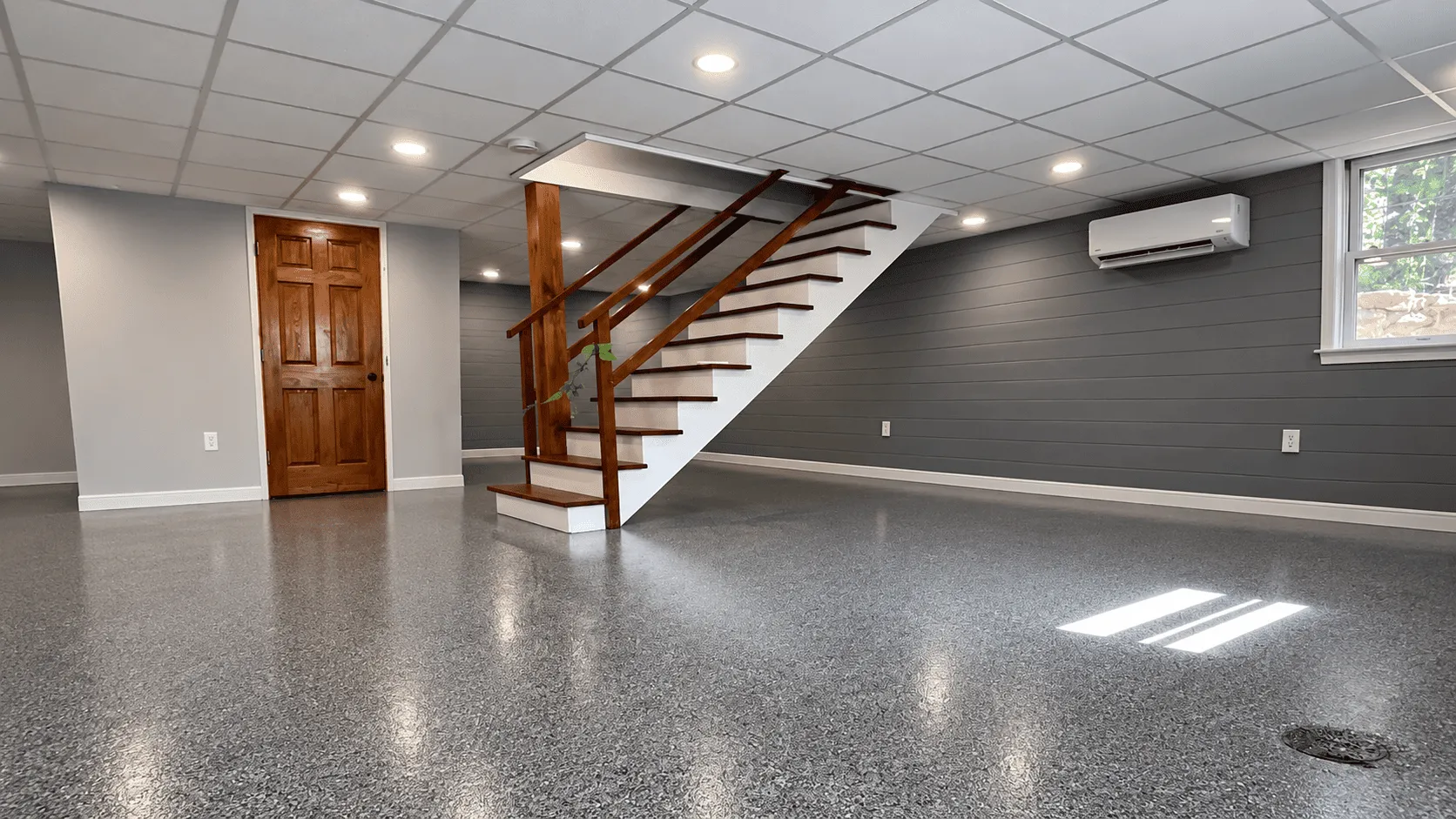
Evaluate below-grade conditions
Basements can present moisture and indoor-environment questions that are less visible than surface wear. The assessment should separate coating-related preparation from building or water problems outside the coating scope.
Leaks, seepage, flooding, plumbing problems, and drainage issues need appropriate correction; a decorative coating is not a waterproofing cure-all.
Concrete moisture testing and product acceptance limits help determine whether a coating, primer, or separate mitigation strategy can be considered.
Efflorescence, weak concrete, adhesives, paint, sealers, cracks, joints, patches, and contamination can change the preparation plan.
Occupied space, temperature, air movement, odor sensitivity, storage, utilities, and access affect product and installation decisions.
Share any water history, odors, white deposits, old flooring, or repairs in your quote request
Prepare what the finish will cover
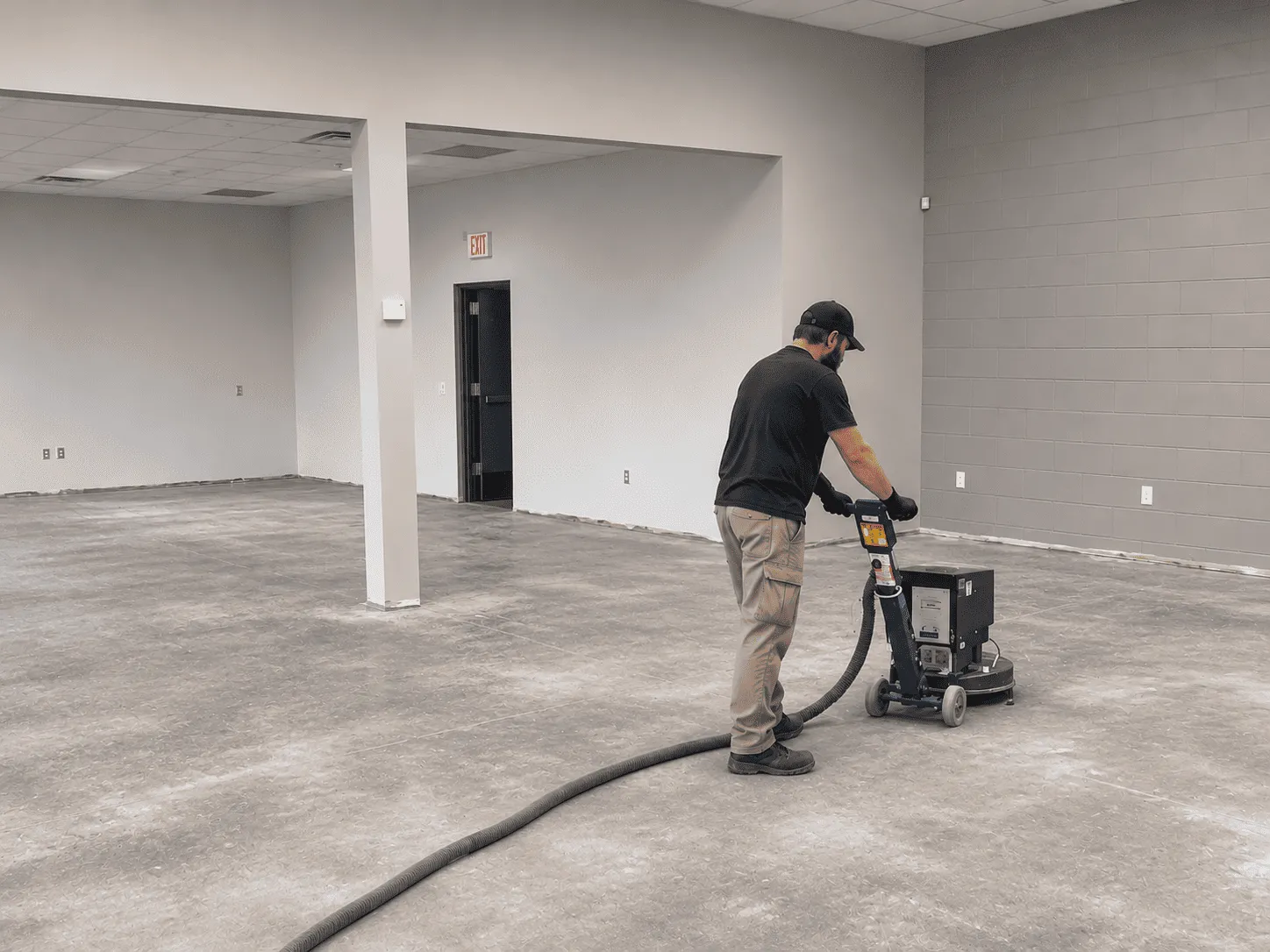
Existing flooring and adhesives may conceal cracks, patches, contamination, or moisture-related deposits. Once exposed, the concrete should be assessed and mechanically prepared to the profile required by the confirmed system.
Testing results must be interpreted against product-specific limits. A moisture-tolerant primer or mitigation layer is not a substitute for repairing active water entry, and no coating can guarantee that future slab movement will remain invisible.
Describe the existing floor covering and known moisture history before choosing a finish
Match the finish to the room
Suitable interior systems may use solid color, decorative flake, quartz, or a design-led finish. The choice should reflect moisture findings, room use, lighting, storage, cleaning, furniture, utilities, and the visibility of future repairs.
Share how the basement is used and the finish character you prefer
Installation process
The sequence should resolve suitability questions before decorative work begins and account for an indoor, below-grade work area.
Document leaks, flooding, condensation, deposits, old flooring, adhesives, cracks, repairs, utilities, ventilation, and room use.
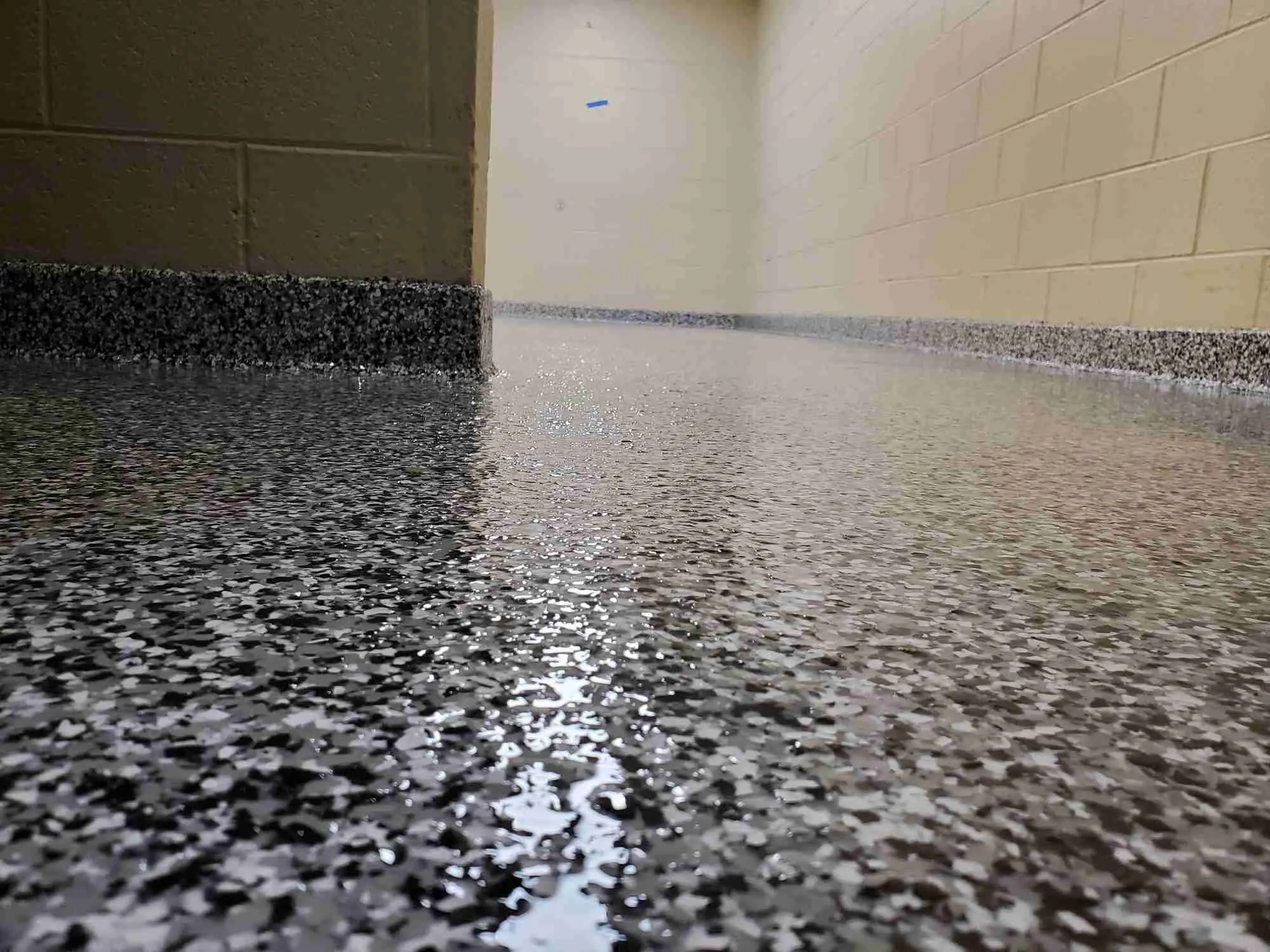
Complete appropriate moisture evaluation, remove incompatible materials, establish the required profile, and address repairs.
Apply the confirmed primer, build coat, decorative treatment, and topcoat within their environmental and recoat requirements.
Follow product-specific ventilation, cure, occupancy, furniture, cleaning, and return-to-service guidance.
Share access, ventilation, and room-use needs so the process can be discussed realistically
Advantages and practical limits
A compatible system can provide a cleanable, visually unified surface, but the final appearance still reflects floor geometry, repairs, joints, and selected texture.
Some systems tolerate specific moisture conditions better than others. No coating should be assumed suitable without testing and documented product limits.
Coating does not correct foundation movement, active leaks, failed drainage, plumbing problems, radon concerns, or uncontrolled water entry.
Ask which findings must be addressed before a coating can be considered
Care and project scope
Routine care depends on the topcoat and texture. Remove grit, clean spills, use compatible cleaners, protect the surface from dragging furniture, and investigate new moisture staining, bubbling, or deposits rather than covering the symptoms.
Cost factors include removal of old flooring or adhesives, preparation, moisture testing or mitigation, repairs, utilities and obstructions, edge work, layer build, finish selection, ventilation, access, and room contents.
Provide floor dimensions, photos, water history, and finish goals for a more useful quote
Basement coating questions
A decorative floor coating is not a universal waterproofing solution. Active leaks, seepage, drainage, plumbing, and foundation issues require appropriate evaluation and correction.
Moisture can affect adhesion and coating performance. Results help compare the slab condition with the documented limits of the selected primer, mitigation layer, and finish system.
Existing materials must be identified and evaluated. Weak, contaminated, moisture-affected, or incompatible coatings and adhesives generally need removal before a bonded system is installed.
No. Repairs can improve the surface, but future movement may reappear. Joints and moving cracks need details appropriate to their function and condition.
Smoother sealed surfaces generally release debris more easily, while added texture changes traction and cleaning effort. The room's use should guide the balance.
They may be considered for residential and commercial interiors when moisture, substrate, occupancy, ventilation, traffic, cleaning, and product suitability are properly evaluated.
Start with the below-grade conditions
Use the form below to share the property type, floor dimensions, existing coverings, water or moisture history, slab condition, room use, finish goals, and access.