
Working time
Some formulations react quickly, which can reduce application time and make crew planning, mixing, and broadcast timing especially important.
Product-specific resin system
Polyaspartic coatings are often considered where cure characteristics, color stability, and a durable topcoat matter. Those qualities vary by formulation, so the slab, application conditions, layer build, and technical data must guide the choice.
Understand the specification
The chemistry name is only a starting point. Working time, cure behavior, film build, moisture limits, recoat window, and end-use performance belong to the exact product system.
Some formulations react quickly, which can reduce application time and make crew planning, mixing, and broadcast timing especially important.
Concrete temperature, air temperature, humidity, dew point, ventilation, and slab dryness must fall within the selected product's requirements.
Aliphatic products may offer improved color stability, but exterior suitability and performance still require product-specific confirmation.
A polyaspartic topcoat does not identify the primer, base coat, decorative broadcast, thickness, or moisture strategy underneath it.
Share the surface, exposure, and scheduling priorities so the complete system can be compared
More than a topcoat label
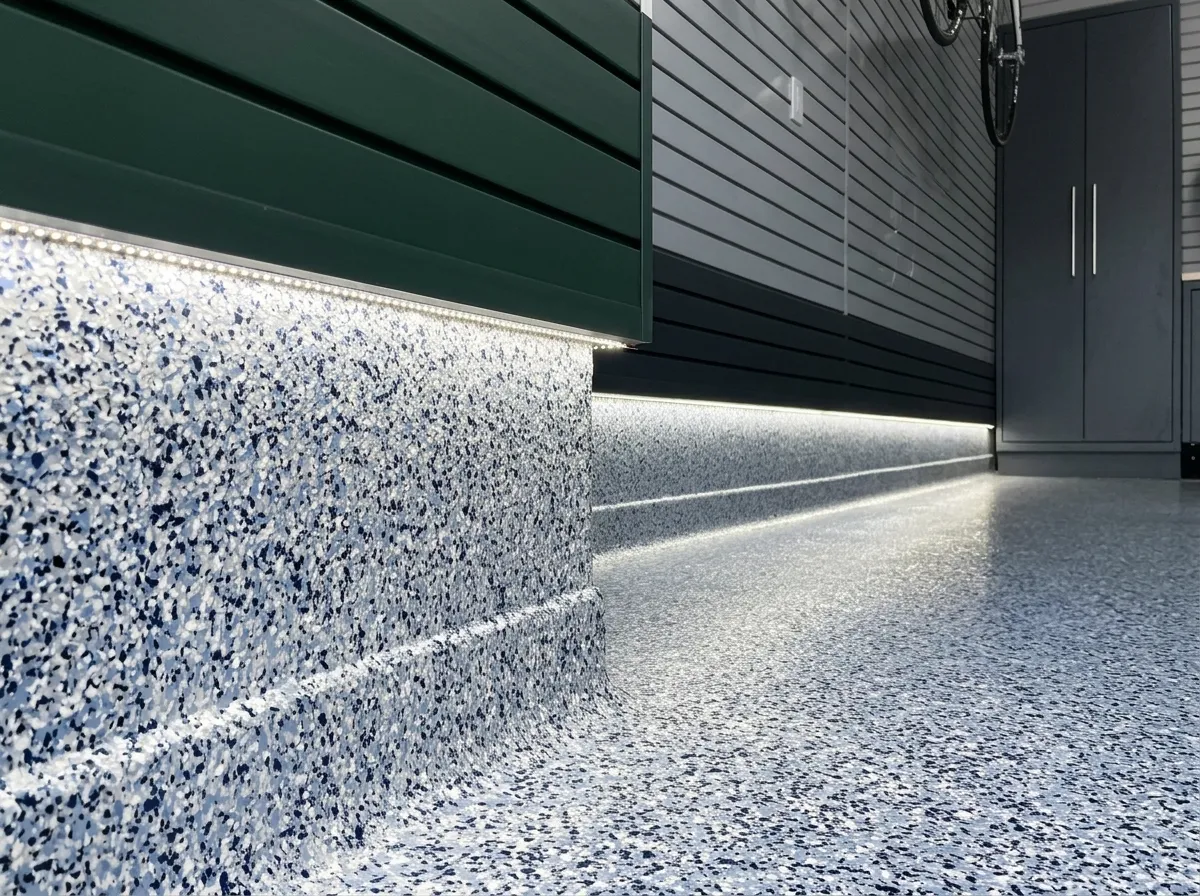
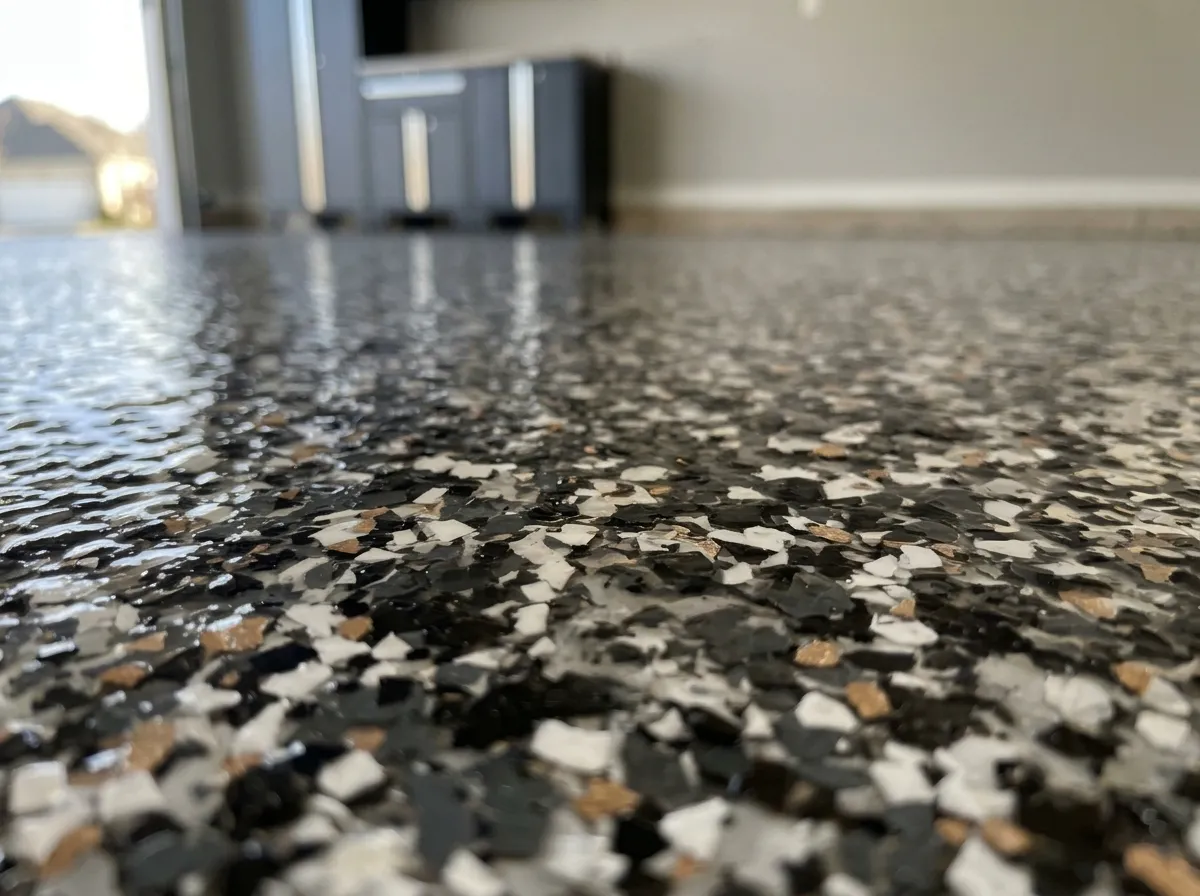
A floor may combine a primer or base coat, a decorative flake or quartz broadcast, grout or seal layers, and a polyaspartic finish coat. The components must be approved to work together, and their recoat windows and film-build limits must be followed.
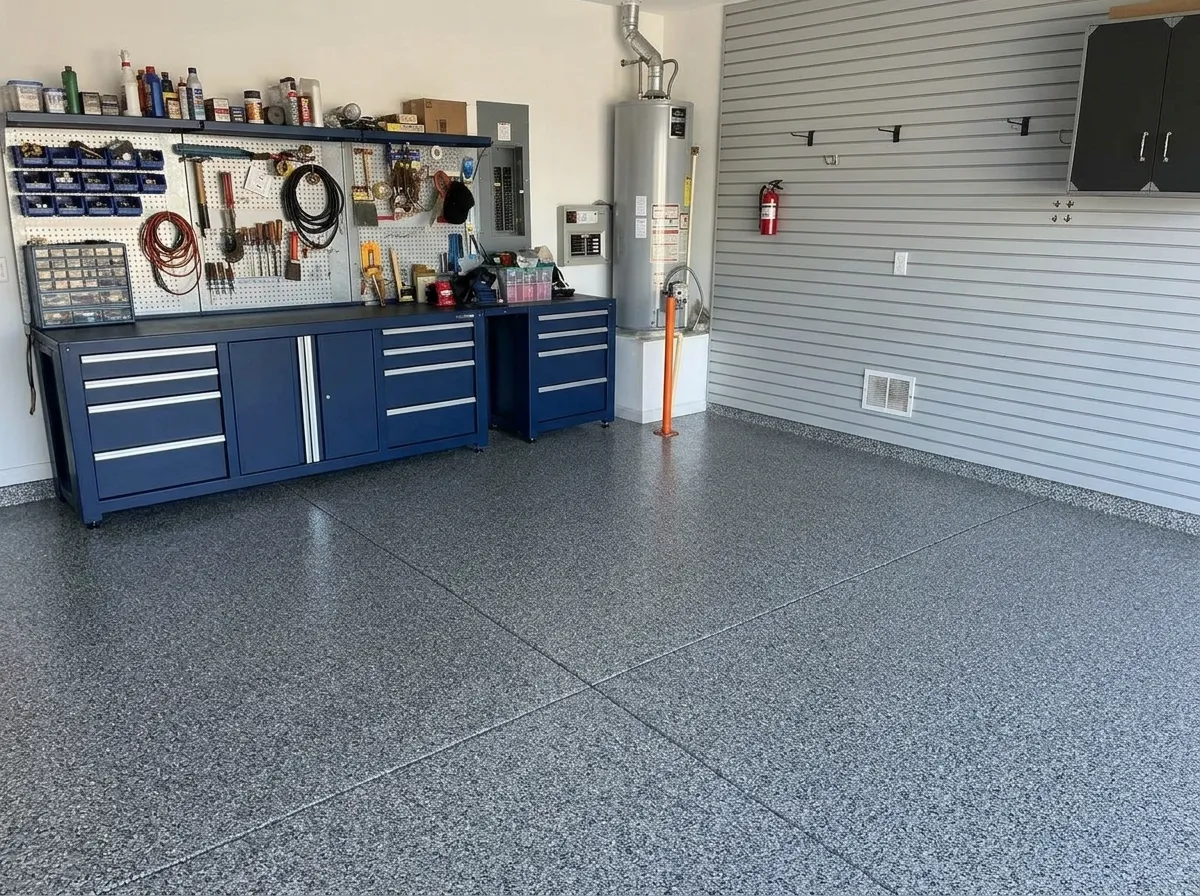
For a vehicle-use floor, compare the complete assembly on the garage floor coating page. For decorative aggregate, review flake and quartz floor coating as finish-system decisions rather than interchangeable resin names.
Ask which layers are selected and what each component contributes
Site conditions control the work
The slab still needs to be sound, clean, appropriately profiled, repaired, and evaluated for moisture. Faster-reacting materials can leave less time to correct application problems, so environmental checks and a coordinated installation sequence matter.
Describe indoor or outdoor exposure and site conditions in your project request
Installation process
The actual system controls the details, but careful planning is especially important when working and recoat windows are short.
Match the selected system to traffic, sunlight, chemicals, texture, cleaning, substrate findings, and schedule.
Mechanically profile the slab, remove contamination and weak material, evaluate moisture, and complete appropriate repairs.
Stage materials and install each layer within its mixing, working, broadcast, and recoat requirements.
Protect the floor and return it to foot, equipment, or vehicle traffic only on the confirmed product schedule.
Share access and downtime needs so the application sequence can be coordinated realistically
Practical advantages and limits
Some systems can progress quickly under suitable conditions, but no installation or return-to-service time should be promised without the exact products and site conditions.
UV and color stability can be a reason to consider an aliphatic polyaspartic finish, yet the technical data must confirm exterior or daylight suitability.
Short pot life, rapid set, humidity, temperature, and dew point can make preparation, staging, and experienced application especially consequential.
Ask for product-specific limits for the actual Sacramento property conditions
Care and project scope
Maintenance should follow the actual topcoat instructions: remove abrasive grit, clean spills promptly, use compatible cleaners, and monitor high-traffic areas for wear. Texture and decorative aggregate can change both soil retention and cleaning effort.
Cost factors include preparation, repairs, moisture findings, layer count, film build, broadcast materials, texture, edges, ventilation, site access, weather or environmental controls, and scheduling. Faster chemistry does not automatically mean a simpler project.
Provide dimensions, slab photos, exposure, and timing priorities for a more focused quote
Polyaspartic coating questions
Formulations and site conditions differ. Working time, recoat time, and return-to-service must come from the exact products used under the actual temperature and humidity conditions.
No broad claim should replace product data. Aliphatic formulations may provide improved color stability, but exterior suitability, weathering, and the complete underlying system still need confirmation.
No. Concrete condition, contamination, moisture, surface profile, repairs, temperature, and compatibility with any existing material must be evaluated first.
No. Polyaspartic describes a resin chemistry. Flake describes a decorative broadcast. A flake system may use compatible polyaspartic components, but the terms are not interchangeable.
Remove grit and spills, then use cleaners and methods approved for the installed topcoat. Texture, traffic, and chemical exposure affect the maintenance plan.
They may be considered for suitable residential and commercial applications. Product choice and system build should reflect the substrate, exposure, traffic, cleaning, and operational requirements.
Compare the actual application
Use the form below to share the residential or commercial surface, slab condition, indoor or outdoor exposure, finish goals, dimensions, and scheduling needs.