
Broadcast coverage
A partial broadcast leaves more base color visible; a full broadcast creates denser visual coverage. The specified coverage changes material use and finish character.
Decorative broadcast flooring
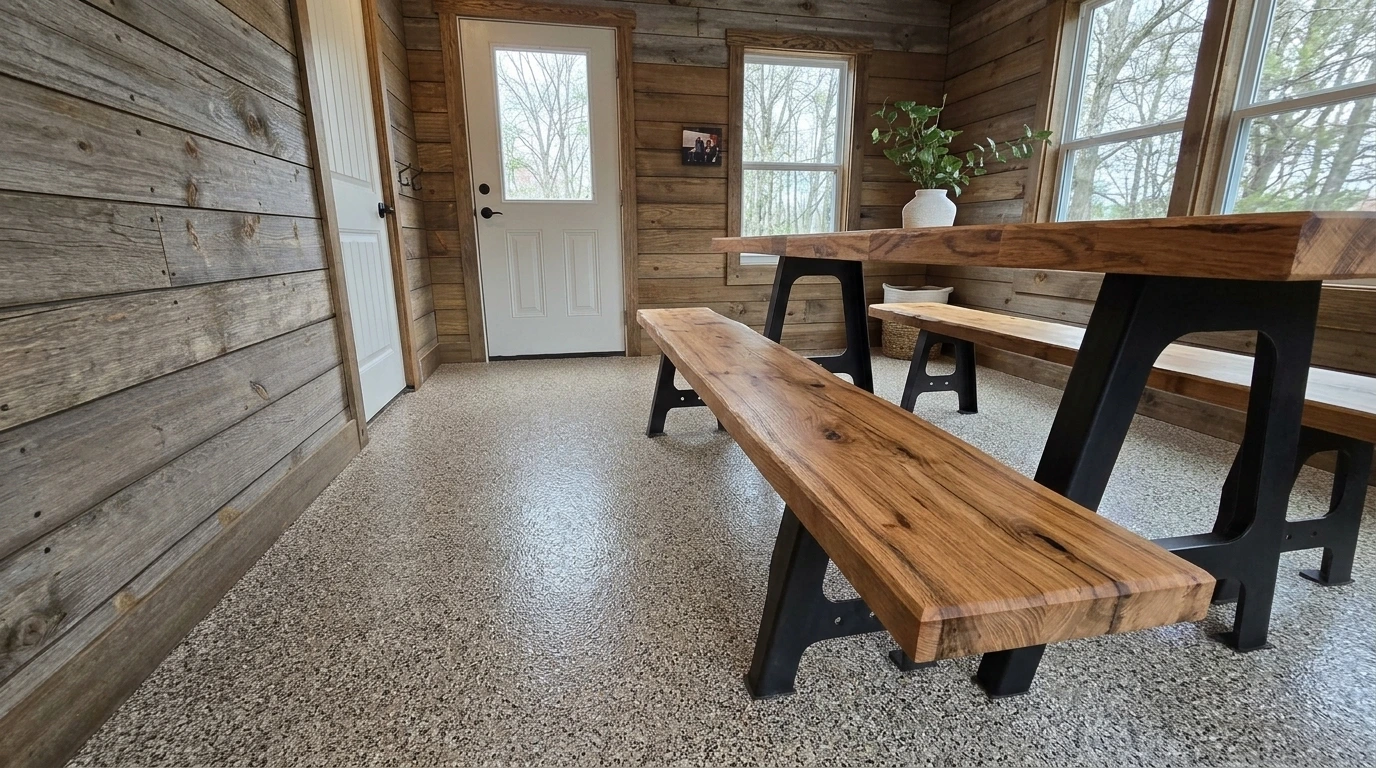
A flake floor uses decorative chips broadcast into a wet resin layer, then sealed with compatible coats. Chip size, blend, coverage, texture, resin selection, and topcoat all affect how the floor looks, cleans, and performs.
Design and use work together
Flake is a finish system, not one fixed recipe. The visual blend should be considered alongside the substrate, exposure, cleaning routine, traction goals, and compatible resin layers.
A partial broadcast leaves more base color visible; a full broadcast creates denser visual coverage. The specified coverage changes material use and finish character.
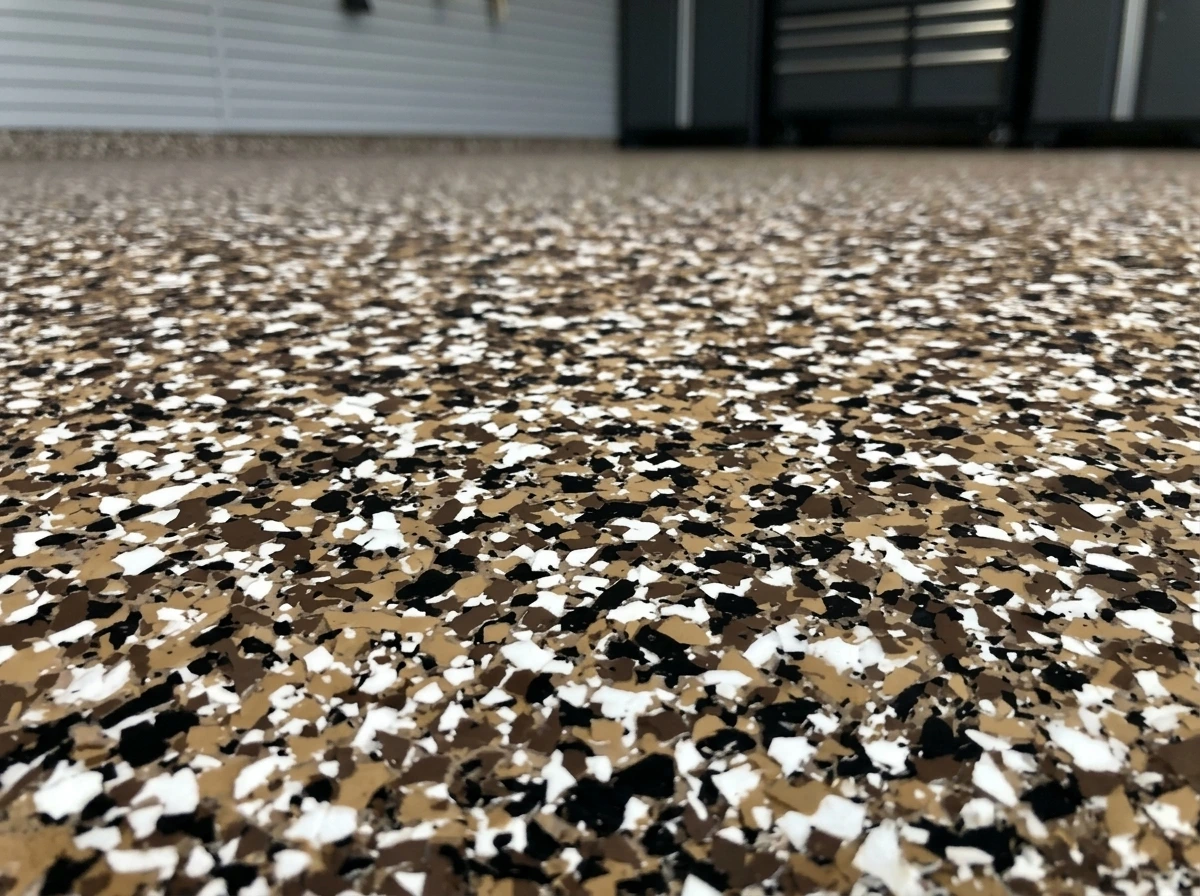
Chip dimensions, colors, contrast, and random distribution influence scale, visual movement, and how dust or small marks appear.
Broadcast aggregate adds profile, while scraping and seal-coat coverage influence the final balance between texture and cleanability.
The topcoat affects sheen, chemical resistance, wear, color stability, texture retention, and maintenance—and must suit the exposure.
Share the space, use, and finish priorities so the flake system can be specified as a whole
Broadcast density changes the result
After concrete preparation, a pigmented base layer receives the decorative chips while wet. Once cured to the required stage, loose material is removed and the surface may be scraped before compatible seal or topcoat layers are applied.
The resin beneath and above the chips can vary. Review epoxy flooring and polyaspartic coatings for chemistry-specific considerations rather than assuming every flake floor uses the same materials.
Ask how broadcast coverage, scraping, and topcoat selection shape the finished surface
Appearance with practical constraints
Blends can range from subtle, low-contrast neutrals to more varied combinations. Installed distribution is naturally random, and screen or sample colors can differ from the final floor. An exact match to a photograph should not be promised.
Describe the preferred color range, sheen, and cleaning routine in your request

Installation process
Successful broadcast work depends on substrate preparation, even base application, coordinated chip placement, and compatible seal coats.
Inspect the slab, evaluate moisture and contamination, establish the required profile, and complete appropriate repairs.
Install the selected pigmented resin evenly within its stated thickness, environmental, and working-time limits.
Distribute chips to the specified density, allow the layer to set, then remove loose aggregate and refine the texture as specified.
Apply compatible grout or topcoat layers and follow product-specific cure and return-to-service requirements.
Share the floor condition and desired broadcast style to start planning the sequence
Residential + commercial applications
A flake finish can provide visual variation, but vehicle use, fluids, door-edge sunlight, texture, and topcoat performance still drive the system decision.
Suitable residential or commercial interiors may use flake to soften the appearance of a seamless resin floor while supporting practical cleaning.
Patios or pool-adjacent surfaces require confirmed exterior compatibility, drainage, wet-traction evidence, weathering performance, and suitable maintenance.
Care and project scope
Remove abrasive debris, clean spills promptly, and use products compatible with the installed topcoat. More pronounced texture can hold residue and require a different cleaning approach than a smoother sealed finish.
Cost depends on area, slab preparation, old-coating removal, repairs, moisture findings, chip size and broadcast density, base and topcoat selections, texture, edges, access, and installation conditions. Localized repairs may not disappear within a random blend.
Provide dimensions, photos, exposure, and a preferred finish direction for a focused quote
Flake flooring questions
No. Flake describes a decorative chip broadcast. Epoxy describes a resin chemistry. A flake system may use epoxy, polyaspartic, or other compatible components in different layers.
A partial broadcast intentionally leaves more base color visible. A full broadcast uses a denser chip application that largely covers the wet base layer before sealing.
Appearance alone does not establish traction. Aggregate, scraping, seal coats, added texture, wear, contamination, and whether the floor is wet all affect performance. Any claim should rely on the actual tested system.
No. Chip distribution is intentionally varied, and repairs or separate installations may not match exactly. Approved blend samples are useful for color direction, not an identical pattern promise.
More texture can retain debris or cleaning residue, while a smoother sealed surface may release soil more easily. The balance should reflect traction needs and the available cleaning routine.
It may suit both when the complete resin system is compatible with the concrete, traffic, sunlight, chemicals, cleaning, and indoor or outdoor exposure.
Choose more than a color blend
Use the form below to share the surface, slab condition, indoor or outdoor exposure, preferred color direction, texture goals, dimensions, and schedule.