
Base and accent colors
Contrast, undertone, and pigment loading influence depth and movement. Colors can read differently under daylight and artificial lighting.
Design-led interior resin flooring
Metallic epoxy uses reflective pigments and controlled application techniques to create flowing, layered visual effects. Every installation varies, so the floor should be designed around the space, substrate, lighting, expected traffic, topcoat, and realistic sample expectations.
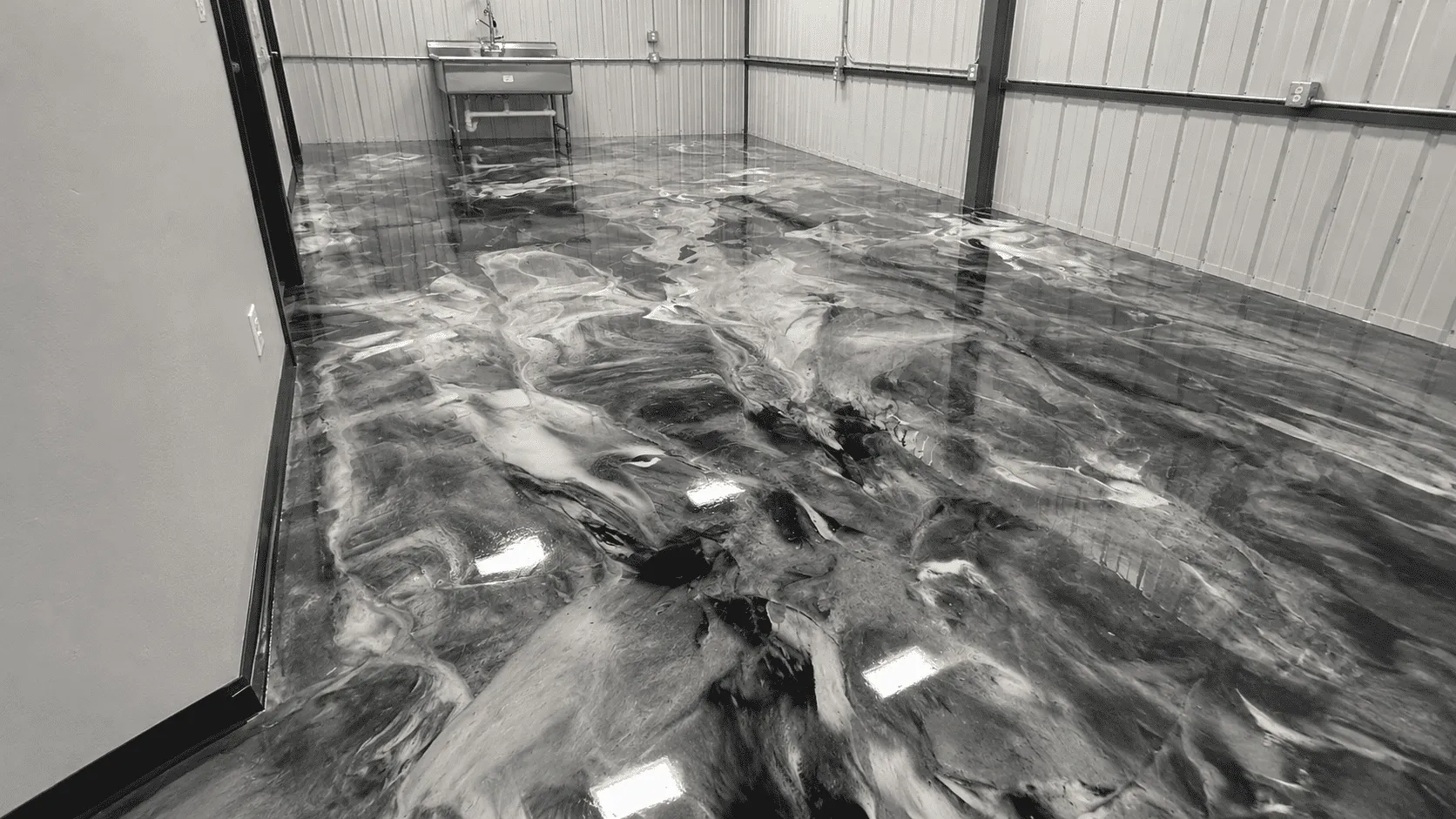
Plan for variation
The final pattern develops through pigment choice, color relationships, placement technique, working time, floor geometry, and lighting. A sample establishes direction, not an exact repeat.
Contrast, undertone, and pigment loading influence depth and movement. Colors can read differently under daylight and artificial lighting.
Pour placement, blending, movement, and timing create organic variation that cannot be duplicated like a printed pattern.
A clear protective layer can affect gloss, depth, scratch visibility, texture, chemical resistance, and maintenance.
Floor shape, joints, patches, transitions, lighting, substrate flatness, and existing defects all influence the visual result.
Share the room, lighting, color direction, and use so design expectations can be discussed clearly
A one-of-a-kind finish
Metallic pigments can create marbled, cloudy, pearlescent, or flowing effects depending on the selected system and installation method. Natural movement is part of the finish; exact swirls, boundaries, and color concentrations cannot be guaranteed.
The underlying epoxy flooring system still needs compatible primers, build coats, and topcoats. Decorative appearance does not replace preparation, moisture evaluation, performance requirements, or care planning.

Interior applications
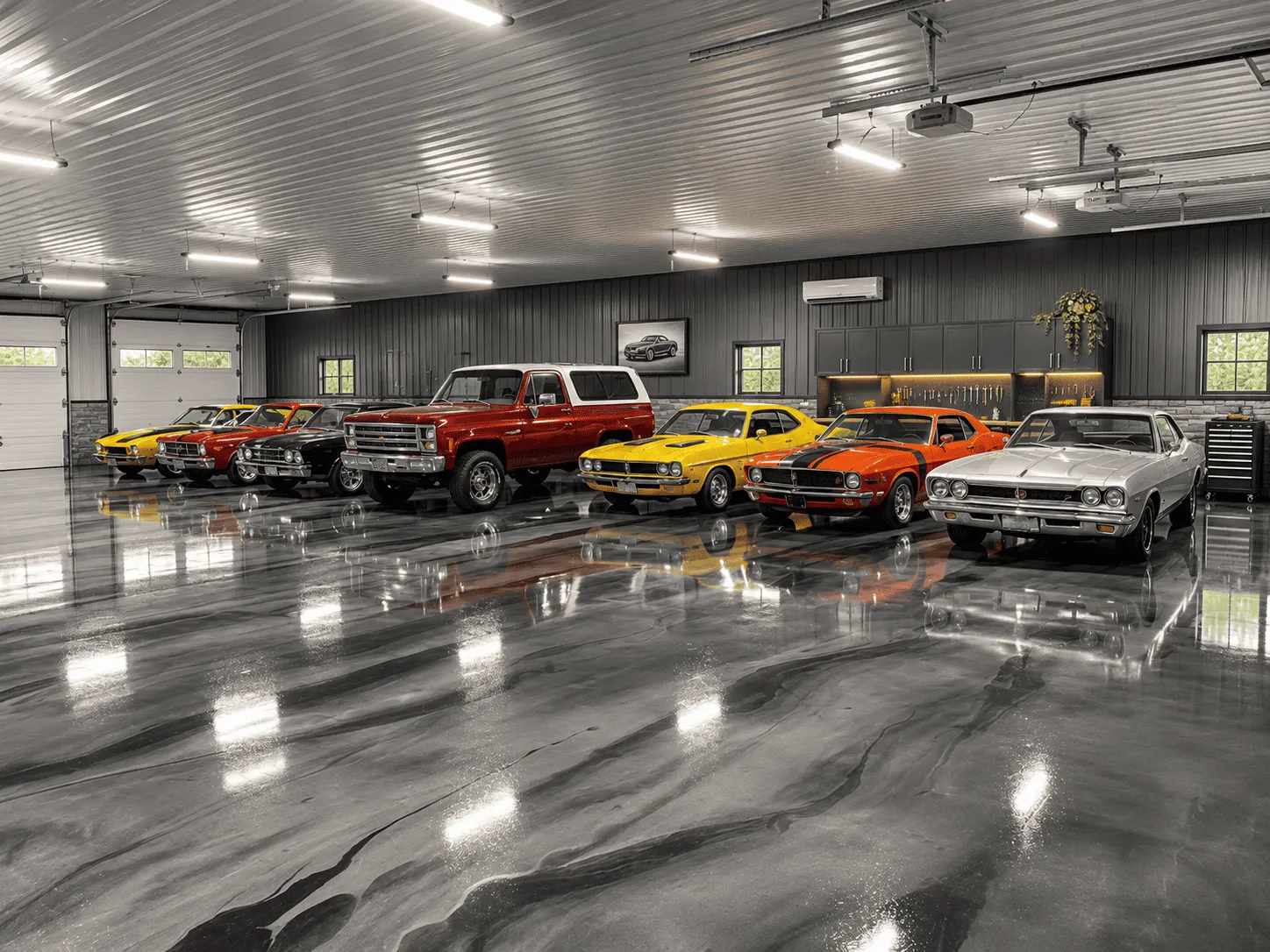
Metallic finishes are typically considered where visual impact matters and the indoor conditions suit the complete system. Residential entertainment areas, finished basements, showrooms, retail interiors, studios, and hospitality-style spaces may have different traffic and maintenance needs.
Describe the residential or commercial interior and how the floor will be used
Installation process
The decorative stage is only one part of the work. Substrate preparation and environmental control provide the foundation for the visual finish.
Review the room, lighting, color direction, gloss, texture, traffic, cleaning, fixed features, and acceptable variation.
Remove contamination and incompatible materials, create the required profile, evaluate moisture, and complete appropriate repairs.
Apply compatible base and metallic layers using the confirmed mixing, placement, timing, and environmental requirements.
Install the selected compatible topcoat and follow product-specific cure, cleaning, and return-to-service guidance.
Share color references and site conditions to begin a realistic design discussion
Advantages and practical limits
Layered pigment movement can make each floor unique, but that same variation prevents exact duplication of a sample, rendering, or previous installation.
High sheen can emphasize depth and color while also making dust, scratches, waviness, repairs, or wear patterns more visible under certain light.
Chemical resistance, abrasion, UV response, traction, and maintenance depend on the complete compatible build—not metallic pigment alone.
Ask how the selected topcoat and sheen match the actual traffic and cleaning plan
Care and project scope
Frequent grit removal and nonabrasive cleaning help limit visible scratching on glossy surfaces. Spills should be handled promptly with methods approved for the installed topcoat, and protective pads can reduce damage from movable furnishings or equipment.
Cost reflects substrate preparation, repairs, moisture findings, floor geometry, primer and base layers, pigment complexity, color changes, topcoat selection, edge details, access, environmental control, and the installation schedule.
Provide dimensions, slab photos, room lighting, and finish references for a more useful quote
Metallic epoxy questions
No. Pigment movement and application produce natural variation. A sample or image can establish color and design direction, but not an identical installed pattern.
Metallic describes a decorative pigment effect within a compatible epoxy flooring system. The primer, base, metallic coat, and protective topcoat still need a complete specification.
All floor finishes can show wear. Glossy, dark, or visually uniform areas may reveal scratches and dust more readily, so traffic, topcoat, cleaning, and protection should be considered.
UV and color stability vary by epoxy and topcoat. Direct sunlight should be evaluated against the exact system rather than assuming that a clear coat prevents every color change.
It may be considered only after below-grade moisture, active water, slab condition, ventilation, and product compatibility are evaluated. A decorative layer does not solve moisture intrusion.
It may suit both when the substrate, traffic, cleaning, lighting, exposure, and design expectations align with the complete system.
Define the design direction
Use the form below to share the residential or commercial interior, floor dimensions, slab condition, lighting, color direction, sheen, traffic, and scheduling priorities.