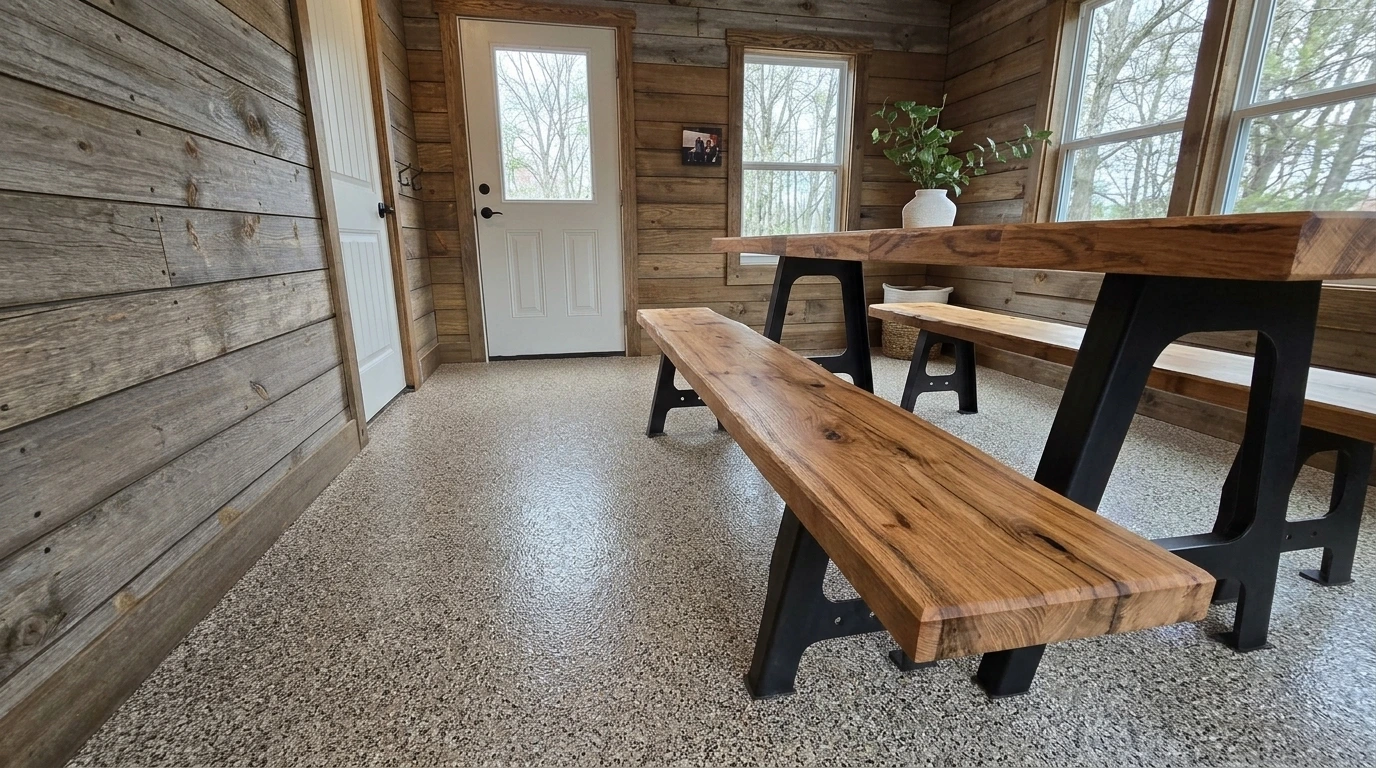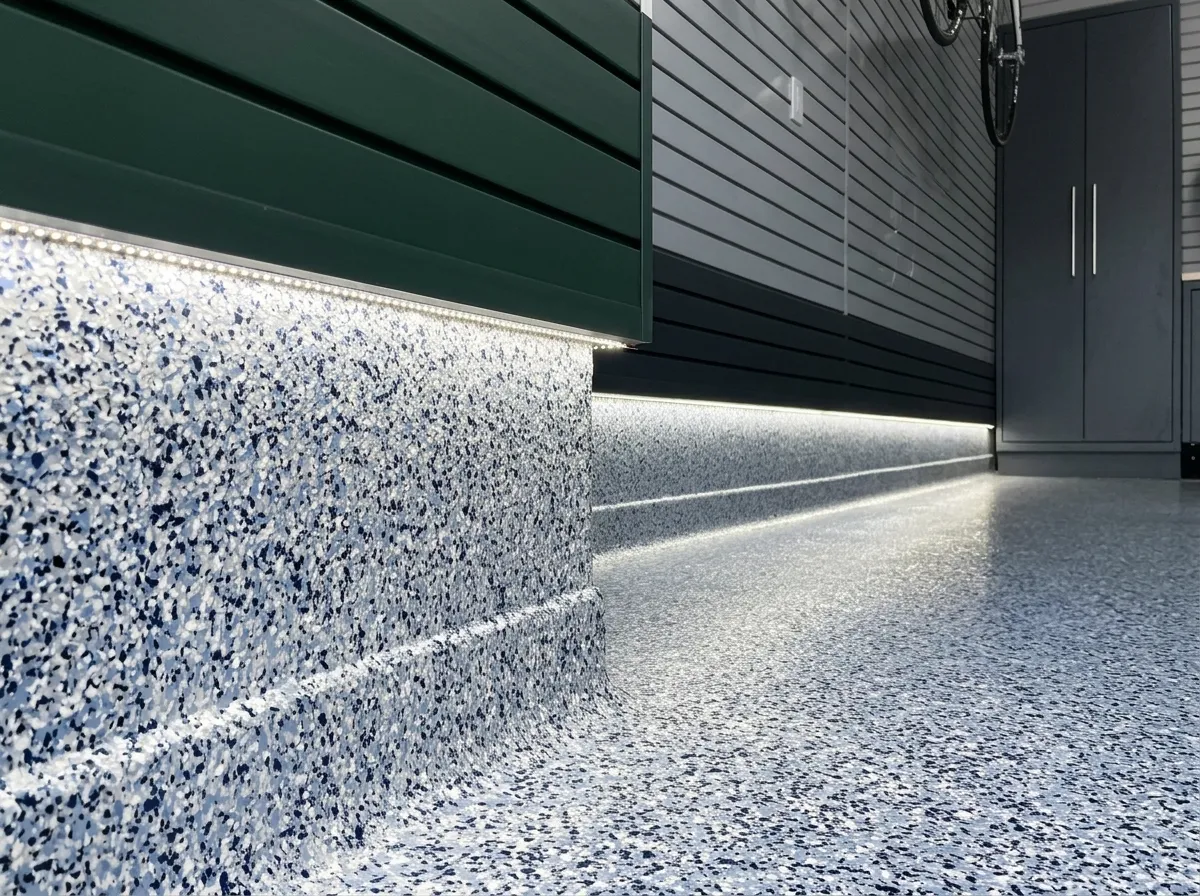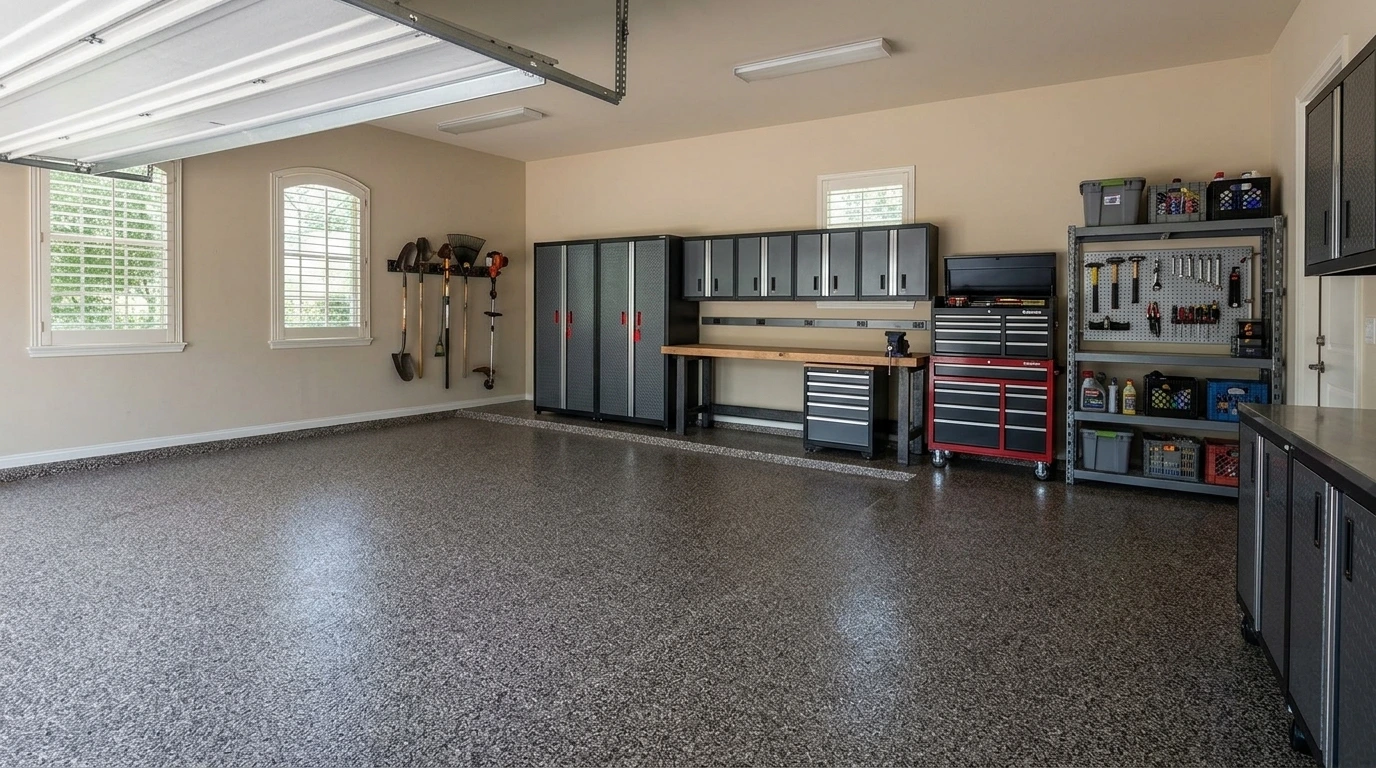
Traffic and storage
Vehicle loads, turning points, jacks, rolling storage, and workshop use create different wear and impact questions.
Residential + commercial garage floors
For home garages, commercial workshops, and other vehicle-use areas, traffic, fluids, sunlight at the opening, cleaning, slab moisture, and downtime all shape the coating conversation. Start with those conditions—not a generic resin label.
Define the use case
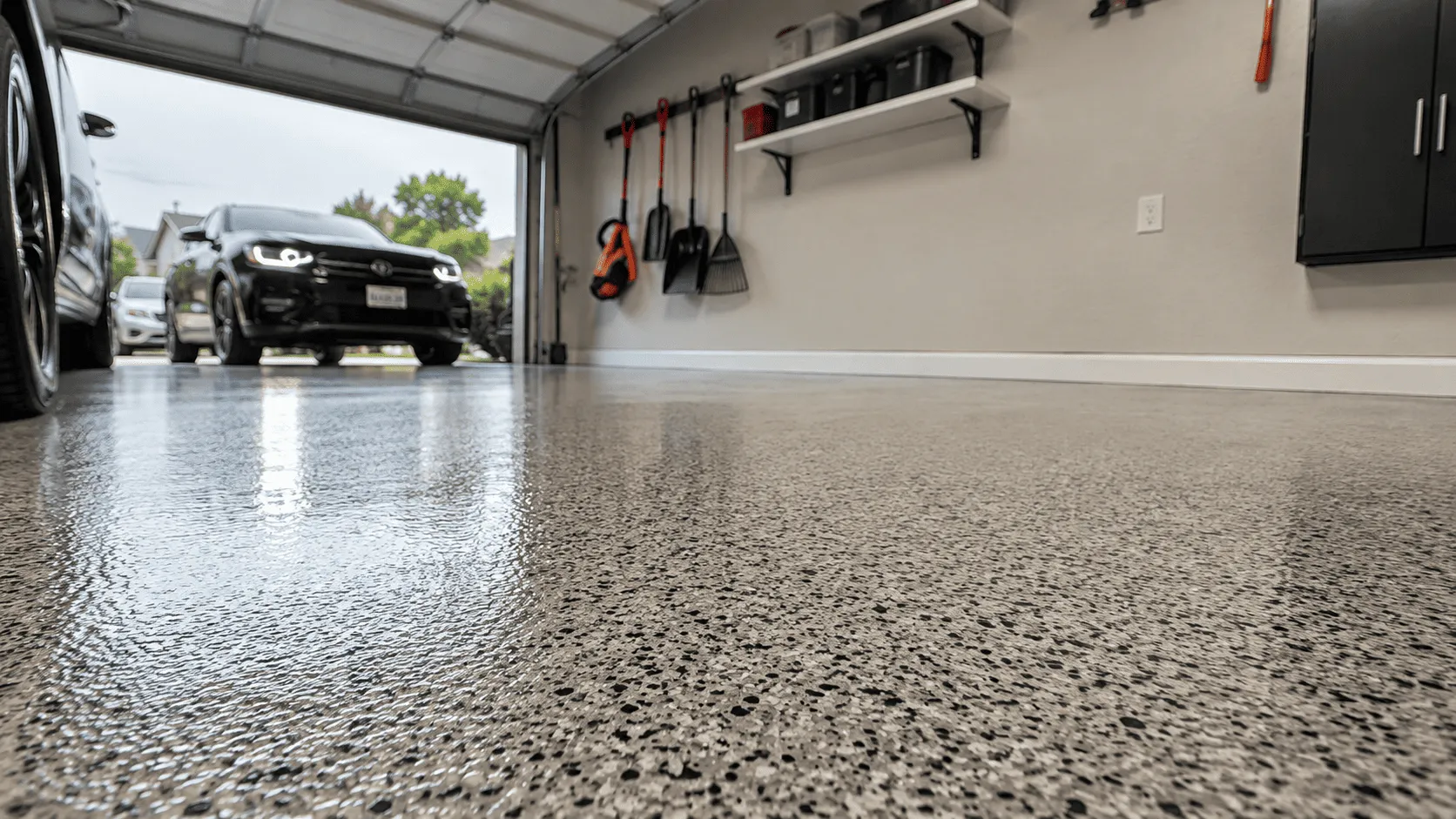
Whether the floor supports daily household use or commercial workshop activity, the best specification begins with the actual exposure. The answers help narrow the system, texture, topcoat, and maintenance plan.
Vehicle loads, turning points, jacks, rolling storage, and workshop use create different wear and impact questions.
Motor oil, cleaners, lawn equipment, and other likely spills should be checked against the exact product's resistance data.
The door edge can receive direct UV exposure. Color stability and topcoat selection are chemistry- and product-specific.
A smoother finish can be easier to wipe, while added texture changes grip, appearance, and cleaning effort.
Share how you use the garage so those conditions can shape the quote
System, not buzzword
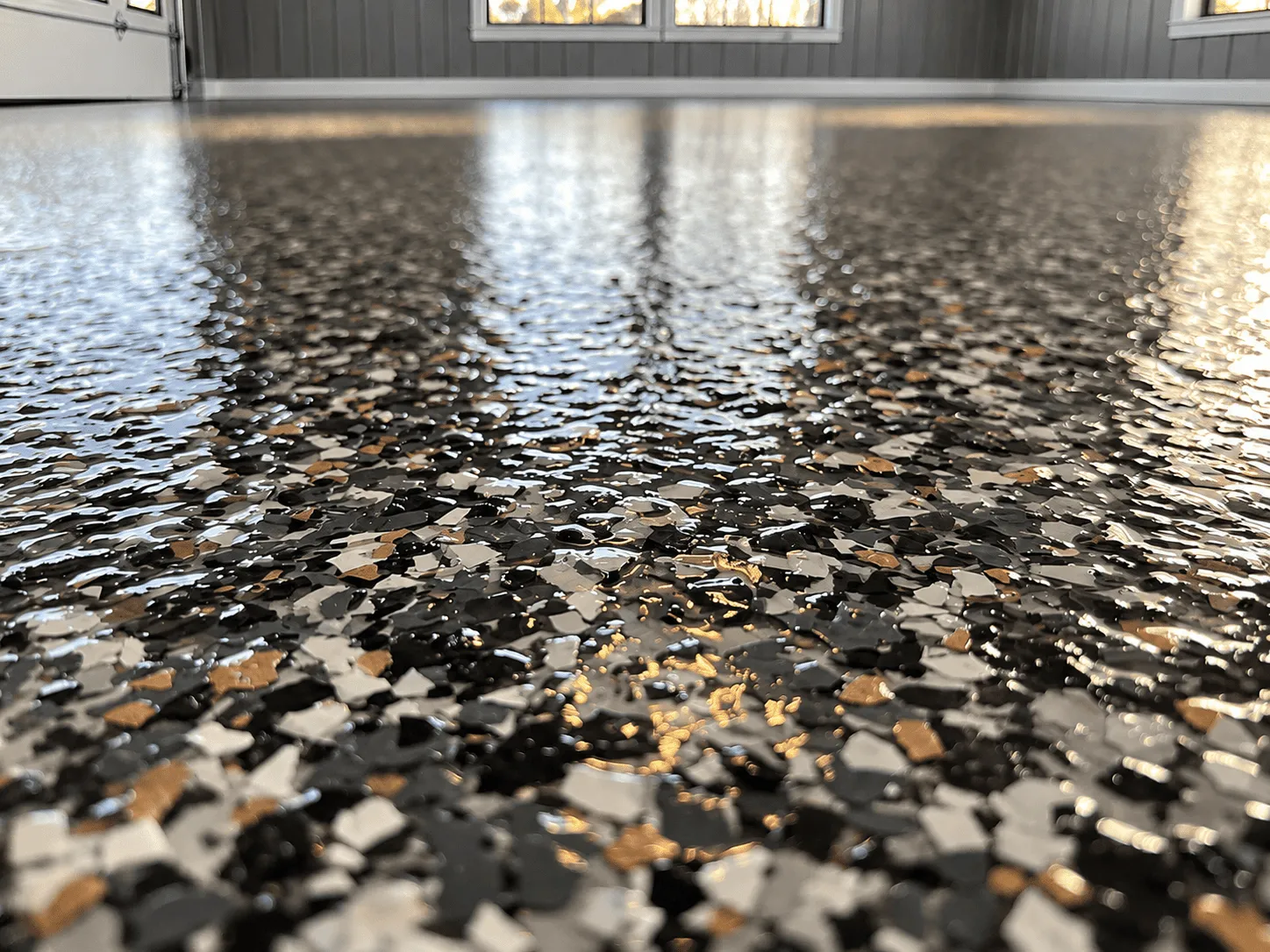
A garage floor may use a primer or base coat, an optional decorative broadcast, and a compatible topcoat. The exact build depends on the selected manufacturer's instructions and the slab's condition.
Epoxy flooring describes one resin category. Polyaspartic coatings have different working and cure characteristics. Flake systems describe a decorative broadcast that may be used with different compatible resins.
Those pages own the chemistry and finish details; this page keeps the decision centered on garage conditions.
Preparation and assessment
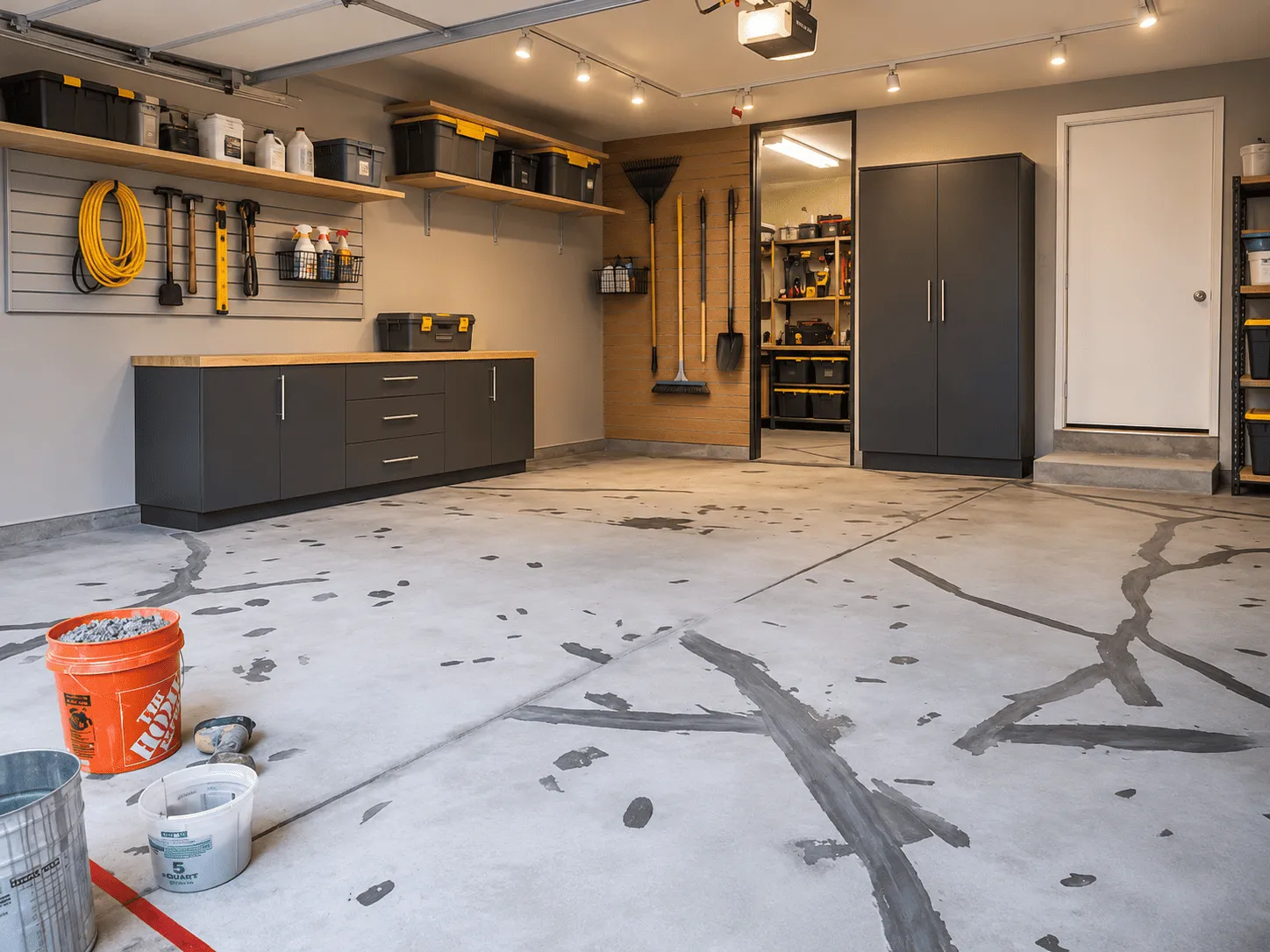
Technical guidance for bonded resin floors emphasizes sound concrete, removal of contaminants and incompatible materials, an appropriate surface profile, repair of defects, and moisture evaluation against the chosen system.
Describe existing coatings, stains, cracks, or moisture concerns in your request
Installation process
The exact products and timing vary, but a sound project follows the same basic sequence from assessment through return-to-service guidance.
Review use, contamination, old coatings, moisture concerns, cracks, joints, edges, and the garage-door transition.
Remove incompatible materials, create the required surface profile, and address repairs according to the selected coating system.
Install the compatible primer or base coat, optional decorative broadcast, and topcoat under suitable site conditions.
Follow product-specific cure, vehicle return, cleaning, and maintenance requirements rather than assuming a universal timeline.
Ownership after installation
Remove abrasive grit, clean spills promptly, and use cleaners and methods compatible with the installed topcoat. Final instructions must come from the actual system manufacturer.
Traffic patterns, dragging metal, impacts, and repeated chemical exposure can change the surface over time. Local repairs may remain visible, especially in decorative blends.
A coating does not stop the slab from moving. Existing cracks can recur, and functional joints may need to remain active rather than being rigidly buried.
Request product-specific care and limitation details with your project discussion
Cost factors
Area matters, but so do slab condition, contaminant removal, old-coating removal, moisture findings, cracks and joints, edge details, chosen layer build, broadcast and texture, access, and the installation schedule.
No price or turnaround should be promised until the actual project and confirmed system are understood.
Provide photos and condition details for a more useful garage-floor conversation
Related comparisons
Not sure which comparison applies? Describe the garage and ask for guidance
Garage floor questions
No. “Garage floor coating” describes an application. Systems may use epoxy, polyaspartic, polyurethane, other compatible components, or a combination. Decorative flake or quartz describes aggregate within a system rather than one universal resin.
Contaminants and incompatible existing materials can interfere with adhesion. The slab should be inspected and prepared according to the selected system; deeply contaminated or weak concrete may require additional work.
No. Cracks and joints require evaluation, and future concrete movement can reappear through a finish. The appropriate repair or joint detail depends on whether a crack is stable and whether a joint is intended to move.
That depends on the exact products, layer build, temperature, humidity, ventilation, and manufacturer requirements. No drive-on time should be assumed until the installed system is confirmed.
Smoother surfaces can release debris more easily, while added texture changes traction and cleaning effort. The right balance depends on how the garage is used and on the approved topcoat and maintenance instructions.
Yes. Concrete Doctor serves residential and commercial customers. A home garage and a commercial workshop may need different preparation, texture, chemical resistance, maintenance planning, and return-to-service timing, so the system should be matched to the specific use.
Plan around your garage
Use the form below to share whether the Sacramento-area property is residential or commercial, along with the slab condition, existing coatings or stains, how the garage is used, and your finish priorities.