
Sun and weather
Direct UV, heat, shade, rain, seasonal temperature changes, and installation weather affect product suitability and long-term appearance.
Exterior residential + commercial concrete
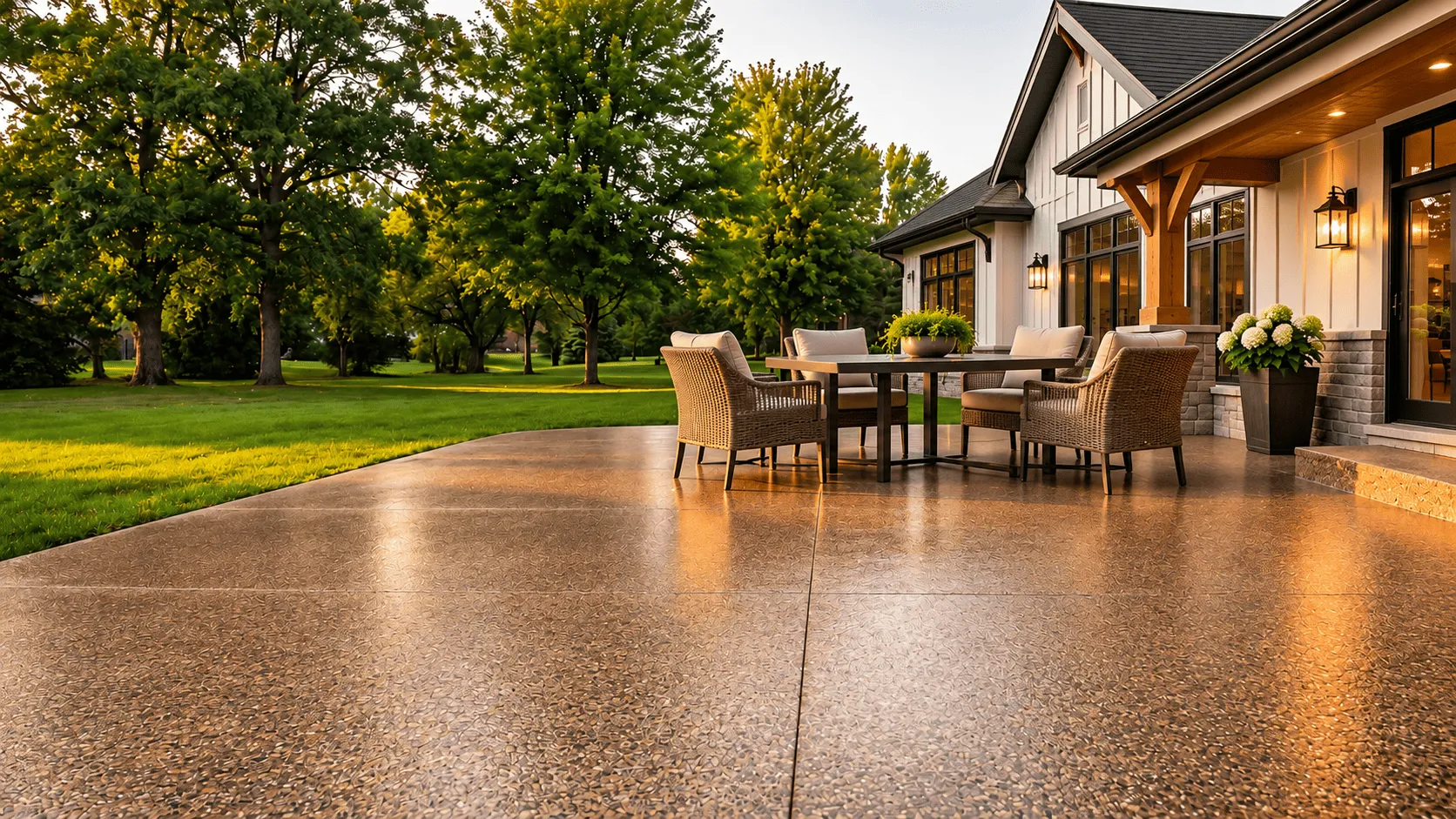
A patio coating must work with sunlight, temperature changes, water, drainage, organic debris, furniture, foot traffic, cleaning, and concrete movement. Exterior suitability belongs to the complete product system—not appearance alone.
Plan for outdoor conditions
Residential patios, restaurant-style outdoor areas, shared courtyards, and other exterior concrete can have different demands. Use and exposure should define the coating brief.
Direct UV, heat, shade, rain, seasonal temperature changes, and installation weather affect product suitability and long-term appearance.
Slope, drains, downspouts, sprinklers, soil edges, planters, and ponding water should be reviewed before a coating is selected.
Foot traffic, movable furniture, grills, service carts, planters, pets, and gathering patterns create wear and stain considerations.
Wet traction goals must be balanced with leaves, dust, food, organic residue, rinsing, and the effort required to clean a textured finish.
Describe sun, shade, water, drainage, and patio use so exterior conditions can guide the quote
Start with the exterior slab
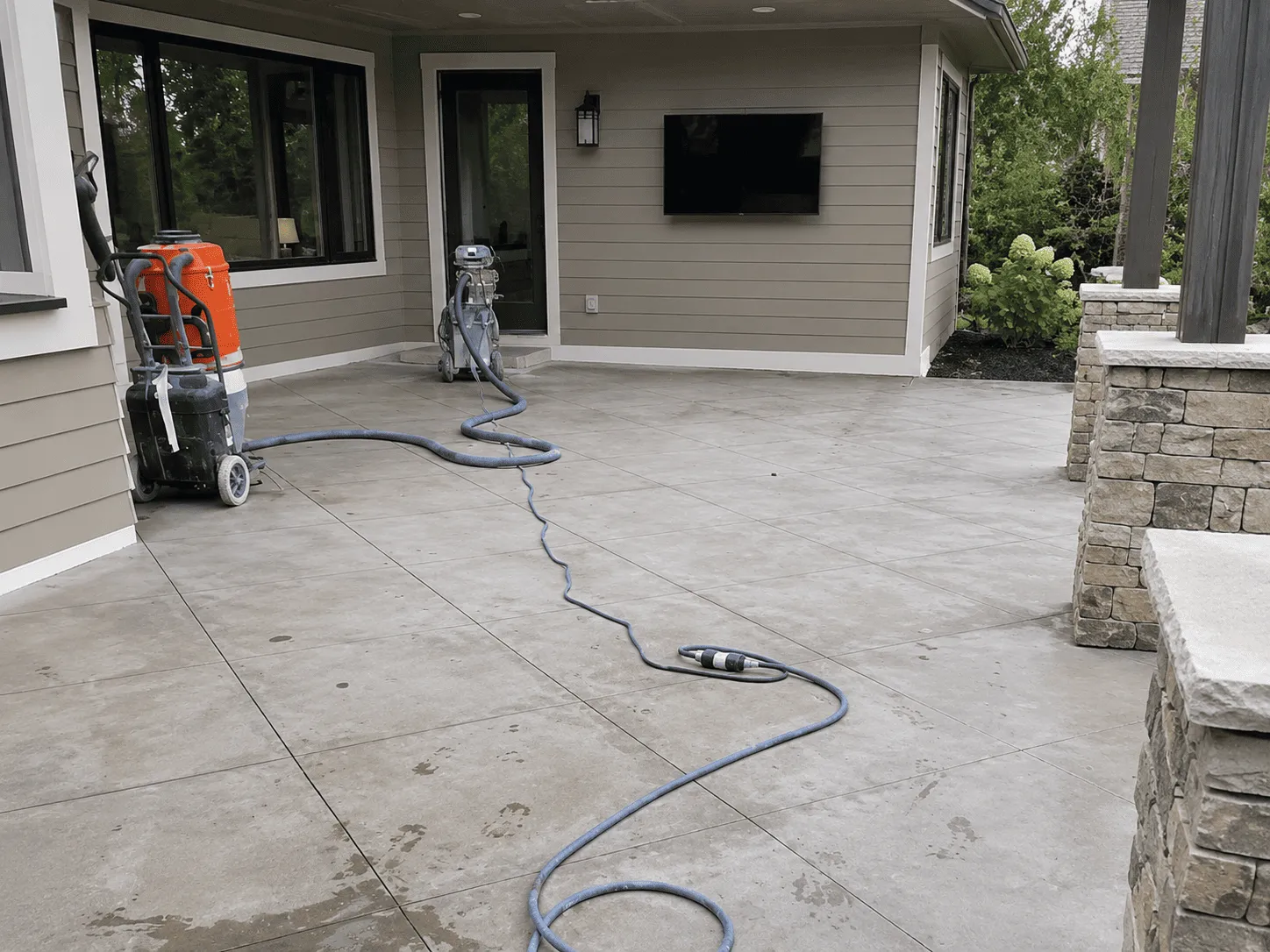
Exterior slabs can hold sealers, paint, dirt, organic growth, efflorescence, grease, weak surface material, and weathered patches. Mechanical preparation should remove incompatible material and create the profile required by the confirmed exterior system.
Cracks, control joints, expansion joints, edges, steps, drains, transitions, and nearby walls must be assessed individually. A coating follows the slab; it does not correct poor slope or guarantee that moving cracks will stay hidden.
Share photos of cracks, existing finishes, drains, edges, and areas where water collects
Exterior finish selection
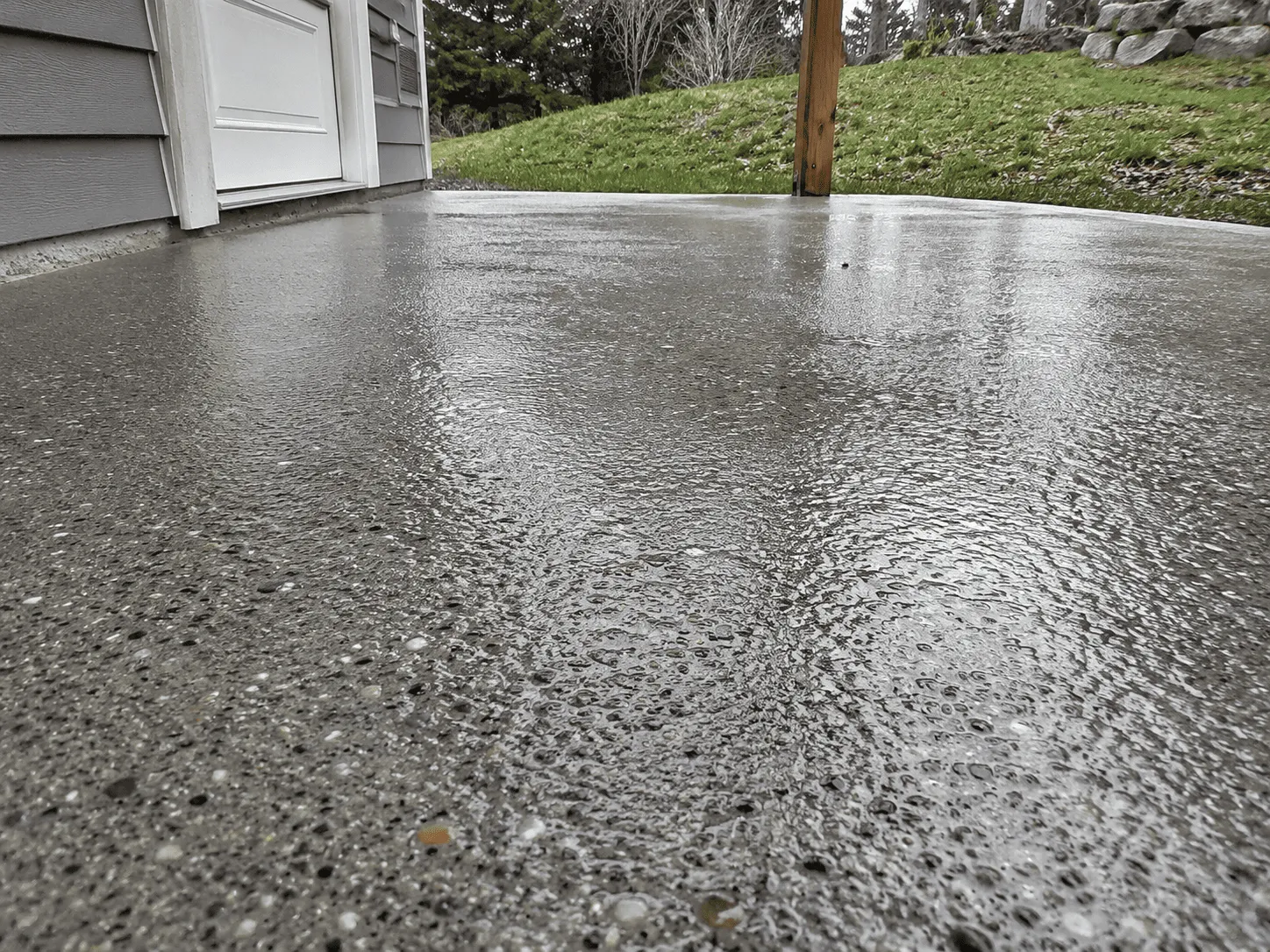
A decorative broadcast, colored aggregate, or other compatible exterior finish can change appearance and texture. The selected resin and topcoat must be documented for the actual UV, water, temperature, and maintenance exposure.
Share color, texture, and cleaning priorities for the exterior surface
Installation process
Exterior work requires a sound substrate, a suitable weather window, and a coating system suited to the expected exposure.
Review sun, shade, water sources, drainage, contamination, old finishes, cracks, joints, furniture, traffic, and access.
Remove incompatible material, establish the required surface profile, clean edges, and complete appropriate repairs or joint details.
Apply compatible layers within product limits for slab temperature, air temperature, humidity, dew point, wind, and rain exposure.
Keep weather, irrigation, furniture, and traffic off the surface until the confirmed cure stage, then follow approved care guidance.
Share access and scheduling needs so a suitable exterior installation window can be discussed
Advantages and practical limits
A compatible coating can refresh color and create a unified surface, but repaired areas, joints, edges, drainage, and slab movement remain part of the finished patio.
Texture can influence grip, but any claim should reflect the tested system, water and contamination, slope, footwear, wear, and maintenance.
UV, heat, water, thermal movement, organic debris, and weather can affect color, adhesion, gloss, wear, and maintenance over time.
Ask about exterior suitability and limitations for the actual patio conditions
Care and project scope
Remove leaves, soil, grit, food, and organic residue before they build up. Clean spills promptly, use compatible cleaners, avoid unapproved aggressive pressure washing, and monitor joints, drains, edges, and high-wear paths.
Cost is influenced by area, access, old-coating or sealer removal, contamination, repairs, joints, steps, drains, edge details, layer build, decorative aggregate, texture, weather scheduling, and protection from irrigation or site use.
Provide dimensions, photos, drainage details, and finish goals for a more useful patio quote
Patio coating questions
No. Exterior suitability, UV response, temperature range, moisture limits, weathering, and the complete layer build must be confirmed for the exact product system.
A coating does not correct inadequate slope, blocked drainage, or a water source. Ponding and drainage should be evaluated before coating work is scheduled.
No. Repairs may improve appearance, but outdoor slabs continue to move with soil and temperature conditions. Cracks and functional joints need appropriate details.
Consider wet use, footwear, accessibility, cleaning, debris, furniture, slope, and relevant traction evidence. More texture is not always better for every patio.
Color can influence solar heat absorption, but surface temperature also depends on sunlight, material, texture, wind, and surrounding conditions. A specific comfort claim requires relevant product data.
They may be considered for both when the complete system suits the slab, traffic, weather, drainage, cleaning, access, and operational requirements.
Plan around outdoor exposure
Use the form below to share the residential or commercial patio, dimensions, existing finish, slab condition, sun and water exposure, drainage, texture goals, and access.