
Wet traction
Texture, slope, water, sunscreen, soil, wear, footwear or bare feet, and cleaning all affect traction. Relevant system testing should support any claim.
Exterior wet-area concrete
A pool deck finish must be designed for routine water, bare feet, sunlight, surface temperature, drainage, texture, poolside residue, cleaning, and concrete movement. Product-specific evidence matters more than a generic “non-slip” label.
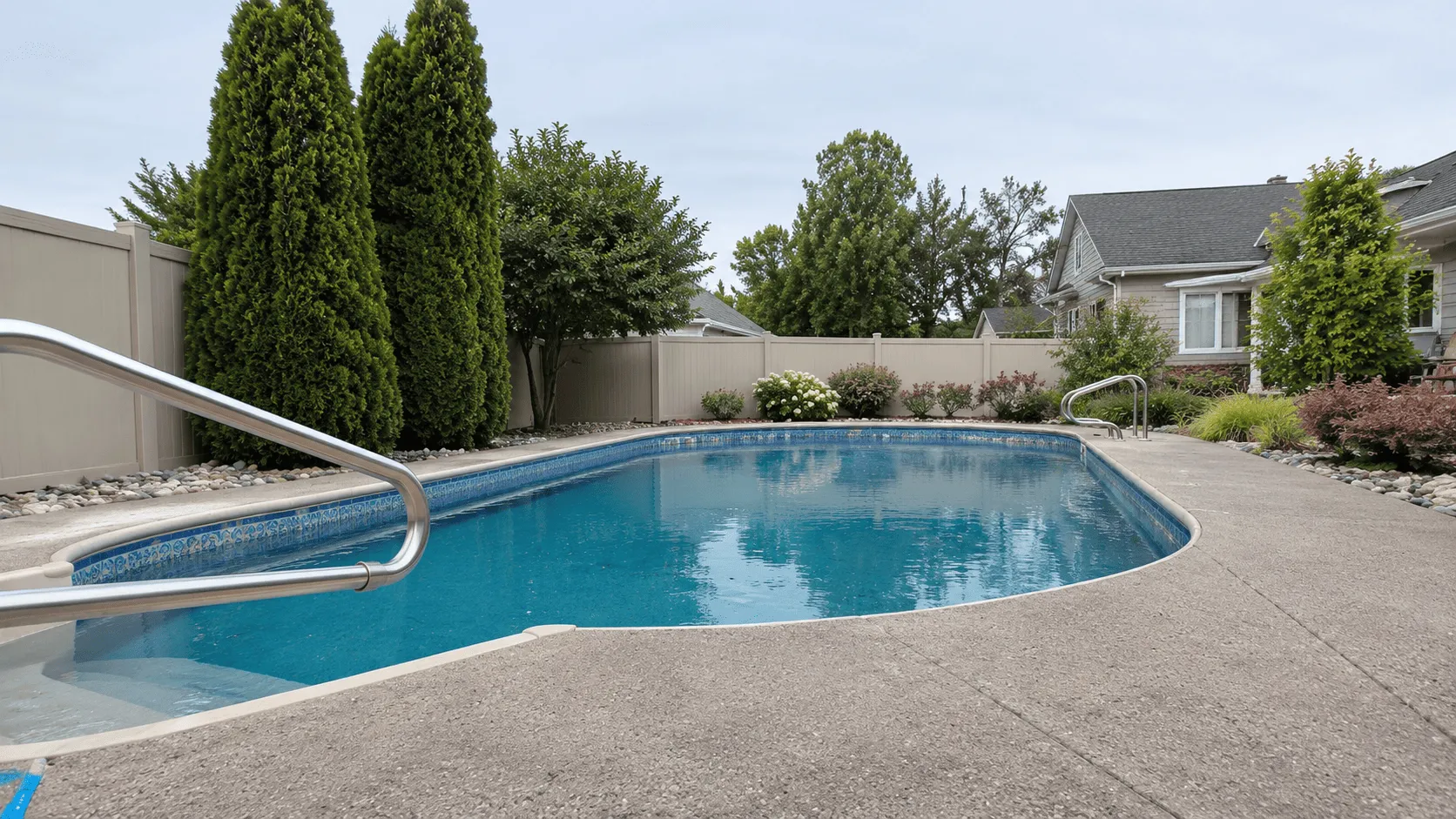
Design for wet use
Residential backyards, shared residential amenities, hospitality settings, and commercial pool areas can have different traffic and maintenance demands. The brief should reflect actual users and operating conditions.
Texture, slope, water, sunscreen, soil, wear, footwear or bare feet, and cleaning all affect traction. Relevant system testing should support any claim.
An aggressive profile may improve one traction measure while feeling uncomfortable or becoming difficult to clean. Texture needs a practical balance.
Color, sunlight, material, texture, and surrounding conditions influence heat. No “cool deck” claim should be made without evidence for the selected system.
Slope, drains, coping, joints, skimmers, equipment pads, steps, and transitions affect preparation and the finished detailing.
Share how the pool deck is used, cleaned, and exposed so wet-area priorities can guide the quote
Texture needs context
A textured aggregate or broadcast finish can create surface profile, but visual roughness is not a substitute for relevant wet-traction data. The final texture also changes how sunscreen, body oils, dust, leaves, and cleaning residue collect.
Quartz flooring may offer an aggregate-based direction, while other compatible exterior systems can use different texture methods. Suitability must be confirmed for wet, UV-exposed, barefoot conditions.
Discuss the users, wet areas, slope, and cleaning routine before choosing texture

Exterior durability depends on details
Pool decks combine weather exposure with repeated splash, evaporation, cleaning, organic debris, and occasional concentrated chemicals. The coating should not be evaluated by color and texture alone.
Share drainage concerns, poolside exposure, and finish priorities in your request

Installation process
Wet-area work requires careful preparation, edge and drainage detailing, consistent texture, suitable weather, and protection from pool operations.
Review use, slope, ponding, cracks, joints, coping, drains, old finishes, contamination, repairs, equipment, and access.
Remove incompatible materials, create the required profile, clean edges, and address repairs and functional joints appropriately.
Install compatible layers and distribute texture consistently within product-specific weather and environmental limits.
Keep water, irrigation, chemicals, debris, furniture, and traffic off the surface until the confirmed cure stage.
Share pool operation and access needs so the installation sequence can be coordinated
Advantages and practical limits
Coating texture can be one part of traction planning, but drainage, slope, contamination, maintenance, footwear, behavior, and wear remain important.
Lighter colors may be considered for solar exposure, but actual surface temperature requires relevant product and site evidence.
A coating does not stop cracks or joints from moving. Repairs and joint details can remain visible or require future maintenance.
Ask about product-specific wet-area evidence and limitations for the pool deck
Care and project scope
Remove leaves and grit, clean sunscreen and organic residue, rinse approved cleaners thoroughly, and follow limits for pressure washing or chemical use. Inspect high-traffic areas, drains, coping, joints, cracks, and edges as part of routine care.
Cost factors include deck area, old-finish removal, preparation, repairs, coping and drain details, joints, equipment access, layer build, aggregate and texture, color, weather scheduling, pool protection, and operational downtime.
Provide dimensions, photos, drainage details, and maintenance priorities for a more useful quote
Pool deck questions
No surface should be described as universally non-slip. Texture can influence traction, but water, oils, slope, wear, footwear or bare feet, maintenance, and the tested system all matter.
Color can influence solar heat absorption, but sunlight, material, texture, air conditions, and surrounding surfaces also affect temperature. Any cooling claim requires evidence for the exact system.
A coating does not correct poor slope, blocked drains, settlement, or a water source. Drainage and ponding should be evaluated before coating work.
Resistance varies by product, concentration, contact time, temperature, and cleanup. Spills should be diluted or removed according to pool and coating guidance rather than left concentrated on the surface.
No. Repairs can improve the surface, but movement can return through a coating. Cracks, expansion joints, and coping transitions require details suited to their function.
They may be considered for both, but user volume, operations, accessibility, wet-traction evidence, maintenance, drainage, and product suitability can differ significantly.
Plan for water, sun, and bare feet
Use the form below to share the residential or commercial pool deck, dimensions, existing finish, cracks and drainage, sun exposure, texture goals, maintenance routine, and access.