
Interior living and utility areas
Basements, utility rooms, and other suitable interior slabs may prioritize cleanability, appearance, and compatibility with indoor conditions.
Residential + commercial resin floors
Epoxy flooring can create a seamless, bonded finish over properly prepared concrete. The right specification depends on the slab, indoor exposure, traffic, likely spills, appearance goals, and every compatible layer in the system.
Start with the environment
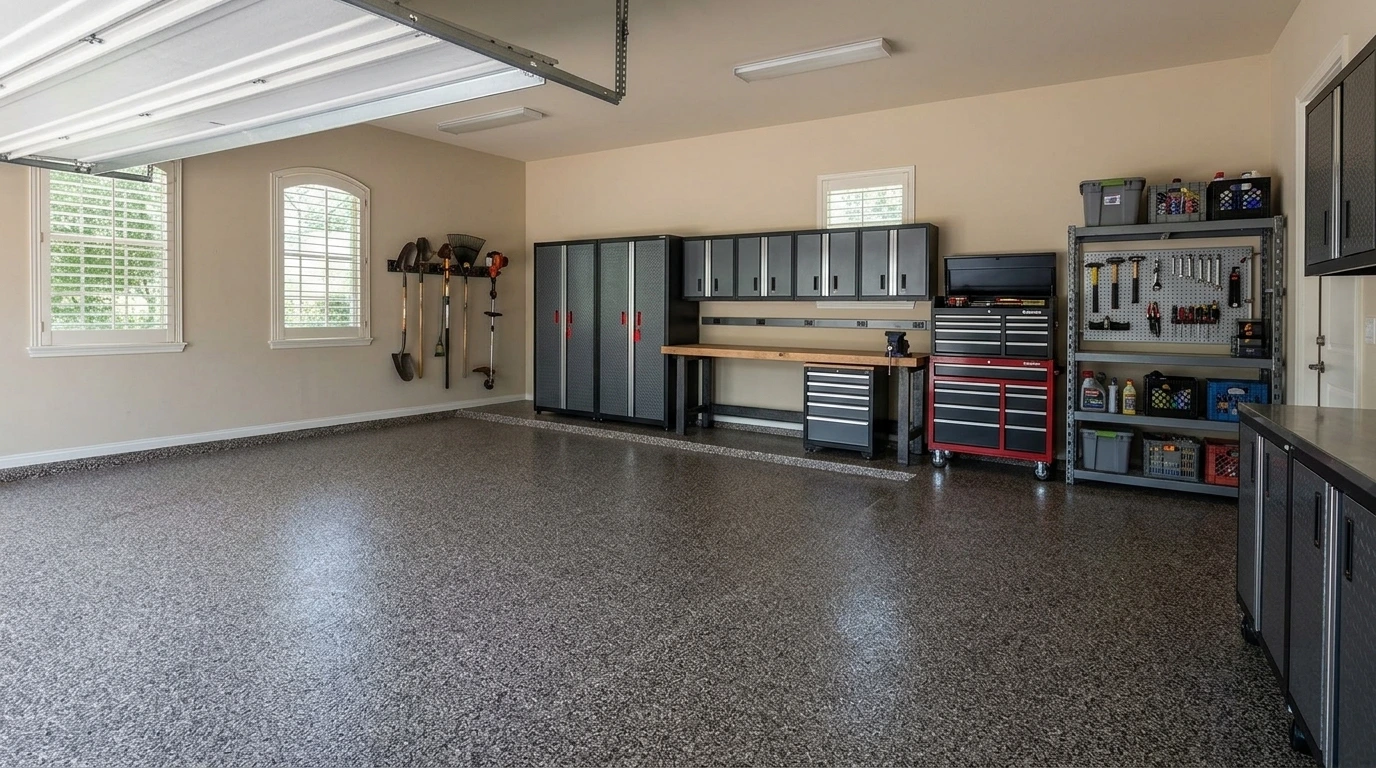
Epoxy is a resin category, not one universal product. A residential room, a workshop, and a commercial interior can require different primers, build coats, finishes, and topcoats.
Basements, utility rooms, and other suitable interior slabs may prioritize cleanability, appearance, and compatibility with indoor conditions.
Vehicle traffic, tires, oils, tools, and sunlight near openings add use-specific questions beyond the resin name.
Commercial interiors may balance visual continuity with foot traffic, cleaning routines, operational access, and repair planning.
Likely chemicals, abrasion, drainage, texture, and maintenance procedures should be compared with product-specific data.
Describe the space, traffic, and exposure so the epoxy system can be discussed in context
A complete layer build
A system may include a primer, one or more epoxy build coats, an optional pigment or decorative aggregate, and a compatible protective topcoat. Each layer has a job, and the complete assembly should come from compatible products with defined mixing and recoat requirements.
Metallic epoxy flooring uses epoxy as part of a design-led finish. Flake flooring describes a broadcast finish that can be paired with an approved resin system. Neither term replaces a complete specification.
Ask about the complete layer build rather than choosing from appearance alone
Bonding begins below the coating
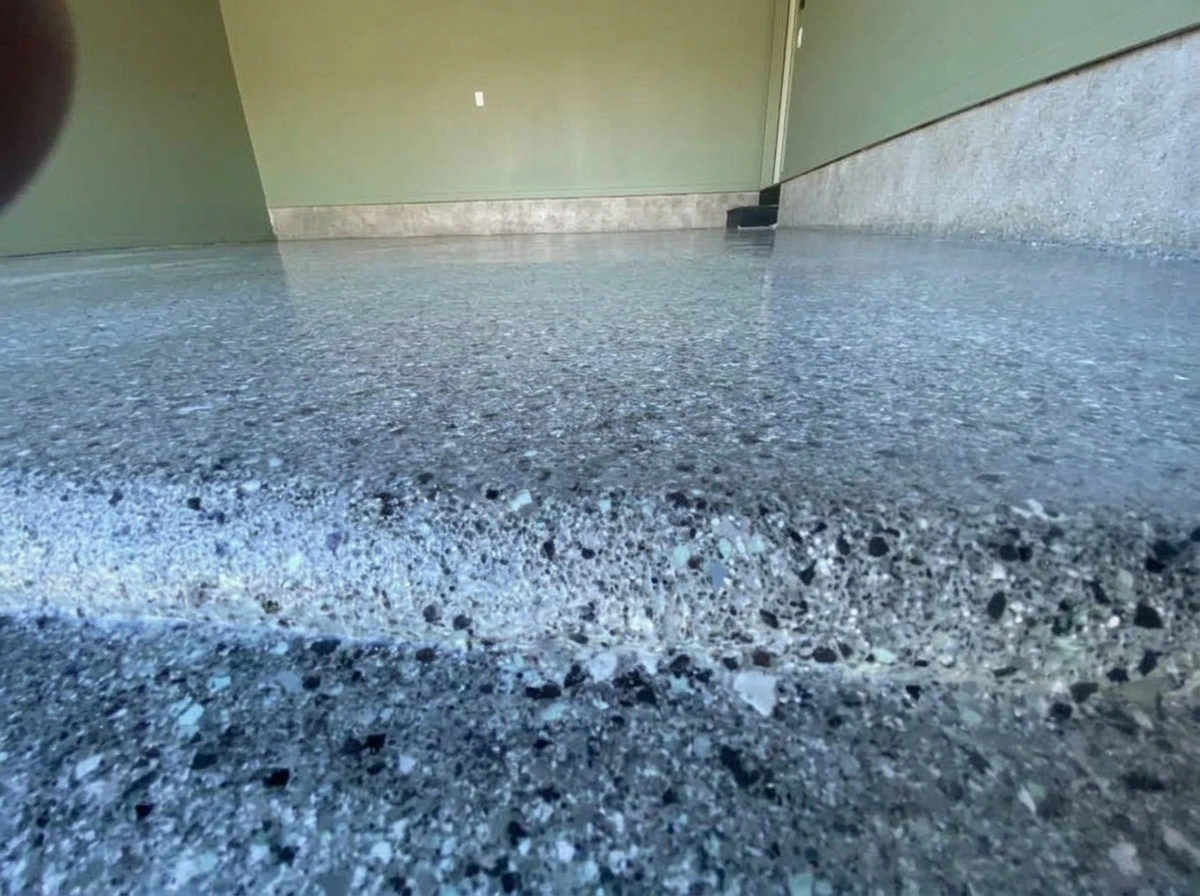
Epoxy depends on sound, clean concrete with a surface profile that matches the selected system. Preparation should remove weak material, contamination, curing compounds, sealers, and incompatible old coatings rather than simply roughening the visible surface.
Share slab history, stains, old coatings, and moisture concerns with your quote request

Installation process
Exact products and timing vary, but the work should progress from substrate evaluation to controlled application and product-specific cure guidance.
Review concrete condition, moisture risk, traffic, chemicals, finish goals, site access, and acceptable downtime.
Remove contaminants and incompatible materials, establish the required profile, and complete appropriate repairs.
Measure, mix, spread, and recoat each compatible component within its stated application conditions and working time.
Keep traffic and contaminants off the floor until the confirmed system reaches the required stage for its intended use.
Share site access and scheduling needs so the installation sequence can be evaluated
Advantages and practical limits
Epoxy can be pigmented or combined with compatible decorative materials, but final color, sheen, texture, and topcoat should match the space.
Resistance varies by formulation, concentration, temperature, contact time, and cleanup. The actual exposure must be checked against technical data.
An epoxy surface does not stop vapor, leaks, or slab movement. Unresolved moisture and moving cracks can affect adhesion and appearance.
List likely spills, sunlight, traffic, and cleaning methods when requesting system guidance
Care and project scope
Routine care generally begins with removing abrasive grit, cleaning spills promptly, and using methods approved for the installed topcoat. Glossy finishes can show scratches and soil differently from textured or patterned surfaces.
Cost is influenced by floor area, concrete condition, contaminant and old-coating removal, moisture findings, repairs, edge details, layer count, decorative materials, topcoat selection, access, and schedule. No useful price can be based on square footage alone.
Epoxy flooring questions
No. Epoxy products differ in formulation, solids, thickness, working time, moisture tolerance, chemical resistance, appearance, and intended use. A floor should be evaluated as a complete compatible system.
Only after the existing material, bond, contamination, and compatibility are evaluated. Weak or incompatible coatings normally need to be removed rather than buried.
No. Chemical resistance is product-specific and depends on the substance, concentration, temperature, exposure time, and cleanup. Technical data for the selected system should be reviewed.
Not by itself. Moisture conditions require evaluation, and any primer or mitigation system must be selected within documented limits. Active leaks and drainage issues are separate problems.
Color stability varies by product and topcoat. Some epoxy formulations can change color under UV exposure, so sunlight should be discussed before the system is selected.
It can be considered for suitable residential and commercial interiors. The final system should reflect the slab, traffic, exposure, cleaning, appearance, and operational requirements of that specific space.
Plan around the whole system
Use the form below to share the residential or commercial space, slab condition, likely exposure, desired finish, dimensions, and scheduling priorities.