
Aggregate and broadcast
Colored quartz gradation, single or multiple broadcasts, resin coverage, and removal of loose aggregate affect texture and visual density.
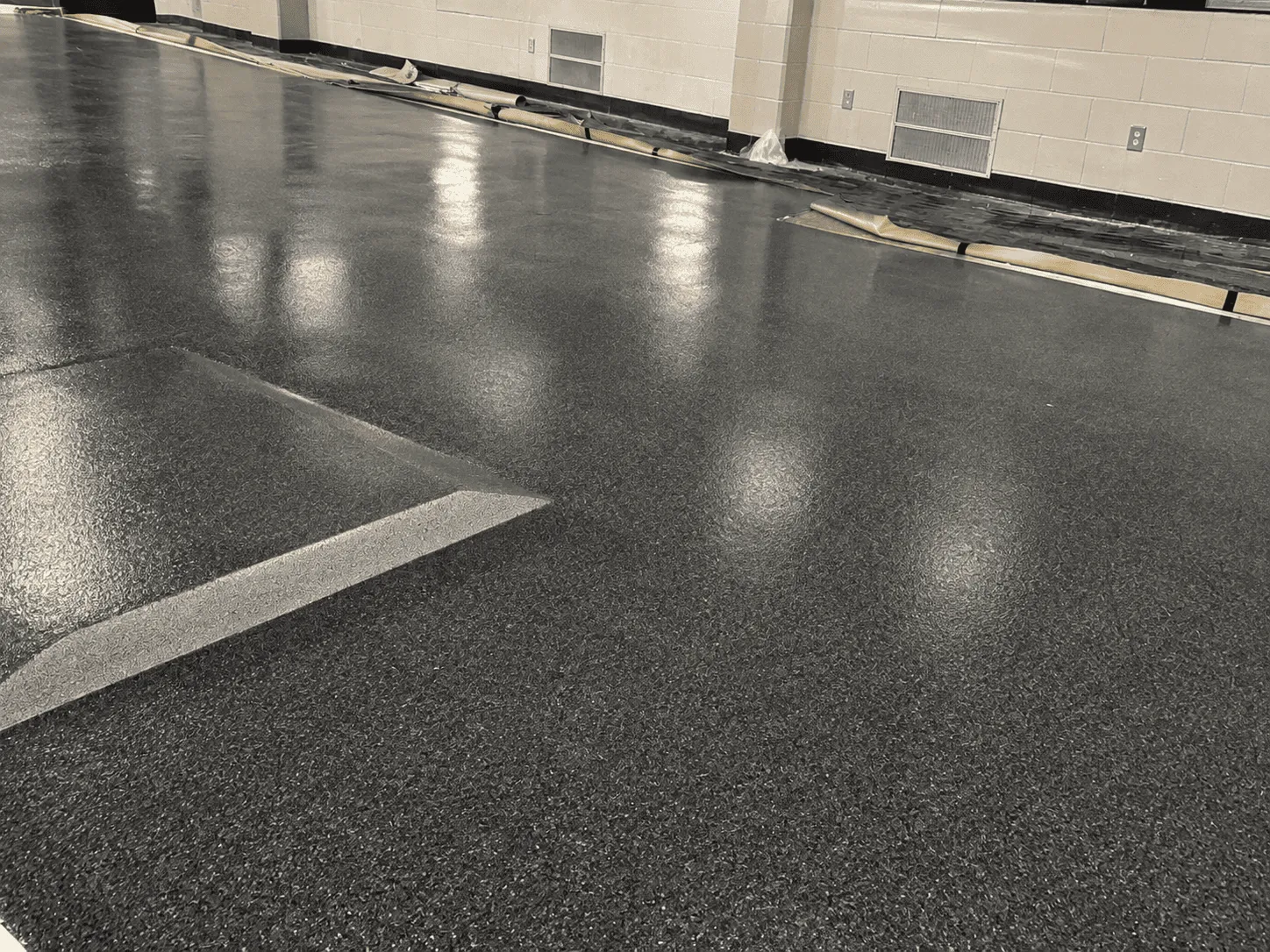
Colored aggregate resin flooring
Quartz flooring broadcasts colored mineral aggregate into compatible resin layers to create a textured, decorative surface. Aggregate size, broadcast method, seal coats, traffic, cleaning, and wet-use requirements all shape the final system.

Texture with a purpose
Quartz systems can be considered for residential and commercial concrete where texture, wear, appearance, and cleaning must be balanced. The intended use decides which properties matter most.
Colored quartz gradation, single or multiple broadcasts, resin coverage, and removal of loose aggregate affect texture and visual density.
Foot traffic, carts, equipment, impacts, and cleaning frequency should be compared with the tested complete system—not the aggregate alone.
Drainage, contamination, footwear or bare feet, slope, and verified traction data matter where water is routine.
More texture can support grip goals but may retain residue. Seal-coat coverage and cleaning equipment should match the operational plan.
Aggregate plus compatible resin
A prepared slab receives compatible primer or base resin, followed by colored quartz broadcast into the wet material. Some specifications use more than one broadcast. Loose aggregate is removed before grout or seal coats lock the surface into the specified texture.
Quartz is not automatically an exterior or wet-area solution. A pool deck coating or patio coating must also address weathering, drainage, surface temperature, movement, and product-specific suitability.
Ask how broadcast layers and seal coats will create the intended texture

Application-specific planning
Quartz systems may be considered for suitable utility areas, entries, workshops, service spaces, commercial interiors, and some wet or exterior surfaces. No one assembly fits every location.
Share the application and operating conditions before selecting aggregate texture
Installation process
Aggregate coverage and final texture depend on controlled substrate preparation, resin application, broadcast, and sealing.
Review concrete, moisture, drainage, traffic, chemicals, cleaning, desired texture, edge conditions, and access.
Remove contamination and incompatible materials, create the required profile, repair defects, and apply compatible primer or base resin.
Distribute aggregate into the wet layer at the specified rate, repeating the broadcast when the selected system requires it.
Refine the surface and apply compatible grout or seal coats to reach the specified texture and finish.
Share drainage, texture, and access requirements to begin planning the installation
Advantages and practical limits
Aggregate can contribute to a robust build, but abrasion, impact, and chemical performance depend on the resin, thickness, seal coats, preparation, and installation.
A visibly rough floor is not proof of safe wet traction. Test method, contamination, wear, slope, footwear, and maintenance all affect real conditions.
Aggressive profile may require brushes, appropriate equipment, and thorough rinsing to remove soil or detergent residue from low points.
Request a texture discussion based on actual use rather than appearance alone
Care and project scope
Routine care should remove abrasive dirt and residues with tools and cleaners suited to the installed seal coat and texture. Spills and concentrated chemicals should be handled according to product-specific guidance.
Cost is affected by slab preparation, moisture findings, repairs, coves and drains, single or multiple broadcasts, aggregate quantity, seal-coat build, texture, access, operational shutdown, and environmental conditions.
Provide dimensions, photos, traffic, wet-use, and cleaning details for a more useful quote
Quartz flooring questions
It is a resinous flooring system that broadcasts colored quartz aggregate into compatible wet resin layers, then uses grout or seal coats to secure and finish the surface.
No. Aggregate and texture can influence traction, but the complete tested system, water or contamination, slope, wear, footwear, and maintenance determine actual performance.
It generally uses two resin-and-aggregate broadcast stages before sealing. The exact layer sequence, thickness, and purpose belong to the confirmed manufacturer specification.
That depends on aggregate size, texture, seal coats, surface temperature, and user expectations. A texture appropriate for one wet commercial area may be too aggressive for a residential pool deck.
Cleaning may require agitation with suitable brushes or equipment, compatible cleaners, and complete soil and residue removal. The installed system's care instructions should control the method.
They may suit both when the system is selected for the concrete, traffic, exposure, cleaning, drainage, texture, and indoor or outdoor conditions.
Plan texture around the space
Use the form below to share the residential or commercial surface, slab condition, traffic, wet-use conditions, cleaning routine, dimensions, and texture goals.